

Radiator Cold at the Bottom: Causes, Risks, and Professional Solutions
- Darrell Willamson
- Jun 7
- 13 min read
A radiator cold at the bottom isn't just a minor annoyance; it's a diagnostic warning that your heating system is under attack from within. While many homeowners try to bleed their radiators to fix the issue, cold patches at the base actually indicate a heavy accumulation of magnetite sludge and debris. This internal corrosion restricts hot water flow, forcing your boiler to work significantly harder just to maintain a lukewarm temperature. You're likely experiencing the frustration of uneven room temperatures and the stress of rising energy bills that don't result in a warmer home.
It's natural to feel anxious about a potential boiler breakdown when your heating feels sluggish, but these issues are manageable with the right technical approach. This guide explains why these blockages form and how a professional Central Heating Power Flush restores total system efficiency. We'll outline the benefits of a Radiator Power Flush, which can help reduce gas consumption by up to 15% when combined with proper inhibitors. By understanding the process used by a Local Power Flush Company, you can protect your boiler and ensure every radiator in your home provides consistent, reliable heat.
Key Takeaways
Understand why a radiator cold at the bottom indicates a build-up of heavy magnetite sludge rather than simple trapped air.
Learn how internal debris forces your boiler to work harder, leading to higher fuel consumption and the risk of a system-wide breakdown.
Discover why standard bleeding is only for air at the top and won't resolve the circulation issues caused by settled sludge.
Identify how a professional Central Heating Power Flush clears blockages to restore consistent heat and extend your boiler's lifespan.
Table of Contents
Why is my radiator cold at the bottom? Understanding the need for a Radiator Power Flush
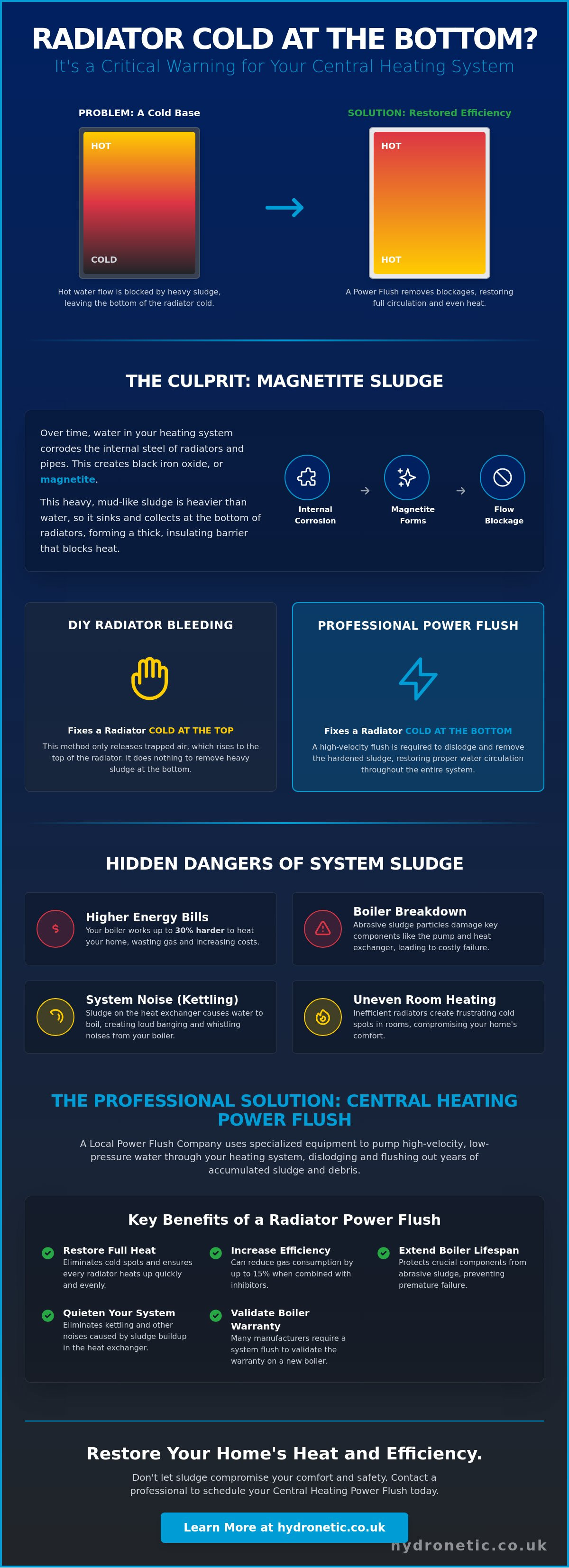
Finding your radiator cold at the bottom while the top remains hot is a common diagnostic sign of a system in distress. It’s a physical symptom that your heating water isn’t circulating correctly through the entire panel. While many people reach for a radiator key to bleed the system, that only works for air pockets trapped at the top. When the cold patch is at the base, you aren't dealing with gas; you're dealing with a heavy, metallic sludge known as magnetite. This substance is the primary reason why a professional Radiator Power Flush is required to restore your home's comfort.
Magnetite is a byproduct of internal corrosion within your central heating system. Over time, the water reacts with the steel of your radiators to create black iron oxide. Because these particles are significantly heavier than water, gravity naturally pulls them down to the lowest part of the radiator. They settle there, slowly building up into a thick, insulating layer that prevents hot water from reaching the bottom fins. As a Local Power Flush Company, Hydronetic Power Flush often encounters this issue in homes where the system hasn't been treated with a high-quality chemical inhibitor. You can learn more about our commitment to technical excellence on our about page.
The mechanics of radiator sludge
As your heating operates, microscopic metal debris flakes off the internal surfaces of your pipes and radiators. These particles combine with the system water to form a substance that looks and feels like thick, black mud. This mud-like barrier acts as an unintended thermal insulator. It sits in the bottom of the radiator, effectively switching off the lower half of the heating panel. Hot water enters the radiator but is forced to bypass the clogged bottom section, leaving it stone cold to the touch. This sludge doesn't just sit still; it's a dynamic threat. As it thickens, it creates a sludge trap that catches even more debris, eventually hardening into a solid mass that resists standard water pressure and requires a high-velocity Power Flush to dislodge.
Why "heat rises" is a misleading explanation
It’s easy to dismiss a cold base by claiming that heat rises, but this logic doesn't apply to a functioning hydronic system. In a healthy home, the pump should circulate water with enough force to ensure uniform warmth across the entire surface of the radiator. A temperature difference of more than 10 degrees between the top and bottom is a significant red flag. If you notice your radiator cold at the bottom, it means the circulation has failed. Ignoring this minor cold patch leads to higher bills and unnecessary wear on your components. Your boiler has to run for longer periods to reach your thermostat's target because the radiator's heat output has been compromised. This inefficiency is exactly what a Central Heating Power Flush is designed to rectify, clearing the pathways so your boiler can operate at its peak A-rated performance.
The hidden dangers of ignoring cold radiator patches: Why a Central Heating Power Flush is vital
Leaving a radiator cold at the bottom is a gamble with your entire heating system's health. While the cold patch itself might seem stationary, the magnetite sludge causing it is constantly shedding microscopic particles into the water stream. This black oxide doesn't stay confined to the radiator; the system pump carries these abrasive particles directly back to the most sensitive parts of your boiler. As these particles accumulate, they create narrow restrictions in the pipework. This is particularly dangerous for modern sealed systems where even small blockages can cause sudden pressure spikes and catastrophic component failure. Identifying these symptoms early is the best way to determine if your home requires a Central Heating Power Flush to prevent a total system failure.
You might notice your boiler making strange whistling or banging sounds, a phenomenon known as "kettling." This happens when sludge coats the heat exchanger, causing water to overheat and turn to steam in trapped pockets. Beyond the annoying noise, the mechanical strain is immense. A sludge-compromised boiler can work up to 30% harder just to reach the same temperature as a clean system. This isn't just inefficient; it's a fast track to a premature and expensive breakdown that a proactive Power Flush could easily avoid.
Sludge and boiler heat exchanger damage
Magnetite is essentially liquid rust. It acts as a powerful abrasive, grinding down the internal seals and moving parts of your boiler pump over time. The most critical risk is a blocked heat exchanger. If the narrow waterways in this component become choked with debris, the boiler will overheat and trigger a safety lockout. In many cases, this results in a total system shutdown during the coldest months of the year. For those already hearing these warning signs, seeking a professional boiler blockage clearance is the only way to prevent a permanent failure and prepare the system for a full Radiator Power Flush.
The financial cost of system inefficiency
The economic impact of ignoring sludge is significant and immediate. Modern condensing boilers rely on a specific "Delta T", which is the temperature difference between flow and return pipes, to operate in their most efficient condensing mode. When you have a radiator cold at the bottom, this thermal balance is destroyed. The boiler never reaches its intended A-rated efficiency because it cannot transfer heat effectively to the room. By properly maintaining your equipment through regular maintenance, you avoid the four-figure expense of a full boiler replacement. A proactive approach is always cheaper than an emergency repair. If your home feels colder than it should, reaching out to a Local Power Flush Company like Hydronetic Power Flush can identify these hidden risks before they become costly disasters.
DIY vs. Professional: Why bleeding radiators won’t replace a Radiator Power Flush
When you discover a radiator cold at the bottom, the most common instinct is to reach for a radiator key. It's a logical first step for many homeowners, but it's based on a misunderstanding of how heating systems fail. Bleeding a radiator is designed specifically to release trapped air or gas. Because air is lighter than water, it always migrates to the highest point of the system. If your radiator is cold at the top, bleeding will fix it. If the cold patch is at the base, you aren't dealing with air; you're dealing with settled magnetite sludge that no amount of bleeding can move.
Attempting to "fix" a sludge-filled radiator with a key is often a waste of time. If water spurts out the moment you open the valve, it confirms the radiator is full of liquid and the blockage is physical debris at the bottom. In fact, repeatedly bleeding a system to try and resolve a cold base can be counterproductive. Every time you release water and top up the system, you introduce fresh, oxygenated water. This oxygen fuels the very corrosion process that creates sludge in the first place, effectively making the problem worse over time.
The myth of the radiator key
Homeowners should be particularly cautious if the water that escapes during bleeding is inky black or contains gritty particles. This "black water" is a clear distress signal from your system. It indicates that the internal iron components are actively corroding. If you see this, stop bleeding the system immediately. You aren't just losing water; you're seeing the evidence of a system that requires a professional Central Heating Power Flush to survive. A radiator key cannot reach the heavy, mud-like barrier sitting at the bottom of your heating panels.
Why professional power flushing is superior
While some DIY enthusiasts attempt a "garden hose flush" or use off-the-shelf chemical cleaners, these methods rarely provide a long-term solution. Chemical cleaners can loosen sludge, but they lack the mechanical force to actually remove it from the property. This often results in the loosened debris travelling through the pipes and getting stuck in the boiler's narrow heat exchanger, leading to an even more expensive repair. A professional Power Flush uses a high-velocity, low-pressure pump specifically designed to dislodge and extract packed magnetite without damaging old pipework.
As a Local Power Flush Company, Hydronetic Power Flush uses specialized equipment that ensures comprehensive radiator sludge removal. This process doesn't just move the debris around; it filters it out entirely. A professional Radiator Power Flush restores the full heat-emitting surface of your radiators, ensuring that the "cold at the bottom" symptom is permanently resolved and your boiler is protected from abrasive wear.
Identifying your system type: Combi, Sealed, or Open Vent?
Diagnosing why you have a radiator cold at the bottom requires a clear understanding of your specific heating setup. Different systems react to magnetite build-up in unique ways, often presenting symptoms that go beyond just cold patches on your walls. In London and the South East, where hard water is prevalent, the combination of limescale and iron oxide creates a particularly dense blockage that resists standard flushing. Identifying whether you have a Combi, Sealed, or Open Vent system is the first step toward a permanent solution.
Each system type handles circulation differently. While the underlying cause of the blockage remains the same, the risks to your boiler vary significantly based on the internal components. A radiator cold at the bottom in a high-pressure sealed system can cause different mechanical stresses than the same issue in an older gravity-fed setup. Recognizing these differences helps you communicate more effectively with a specialist when booking a repair.
Combi Boilers and the sludge threat
Combi boilers are the most common choice for modern homes, but their compact design makes them highly vulnerable to debris. Unlike older, larger boilers, a Combi uses a very small plate heat exchanger to provide hot water on demand. Even a tiny amount of sludge can choke these narrow waterways. If you've noticed your shower temperature fluctuating or your hot water taking longer to heat up, it's likely that debris from your radiators has reached the boiler. Following a regular schedule for Combi boiler maintenance is essential to prevent these internal components from seizing entirely or requiring an expensive replacement.
Sealed Systems vs. Open Vent
For those with Sealed Systems, the primary concern is pressure stability. These systems operate under constant pressure, and blockages caused by sludge can lead to sudden drops or spikes that trigger a boiler lockout. Conversely, Open Vent systems are often referred to as "sludge factories" by technicians. Because they use a feed and expansion tank in the loft, they're constantly exposed to fresh oxygen. This oxygen accelerates the rusting of your steel radiators, leading to the rapid accumulation of magnetite at the base of the panels.
You can identify your system type with this quick checklist:
Open Vent: Look for a small water tank in your loft and a separate hot water cylinder in an airing cupboard.
Sealed System: You'll have a hot water cylinder but no tank in the loft; look for a pressure gauge on the boiler.
Combi: No tanks or cylinders anywhere in the property; hot water is produced instantly by the boiler.
Regardless of your setup, a radiator cold at the bottom is a sign that the system's equilibrium is broken. If you aren't sure which system you have, a Local Power Flush Company can provide a professional assessment and restore your heating efficiency.
Restoring your heat: The Hydronetic Power Flush process
As a Local Power Flush Company serving London, Essex, Kent, and Surrey, Hydronetic specializes in reversing the damage caused by years of internal corrosion. When you find a radiator cold at the bottom, it requires more than just a quick rinse. Our Central Heating Power Flush is a methodical, technical restoration that clears the heavy magnetite sludge sitting at the base of your heating panels. We use specialized high-velocity pumps and industrial-strength magnetic filters. These filters are essential because they capture every gram of metallic debris as it circulates, preventing it from settling back into your boiler or pipework.
In regions like London and the South East, the high mineral content in the water often makes sludge even more stubborn. We use specific chemical surfactants during the Power Flush process to break down these mineral-sludge bonds. This ensures a deeper clean than standard procedures. Once the mechanical cleaning is complete, we perform a final water treatment stage. This involves flushing the system with fresh water until it runs perfectly clear, followed by the addition of high-grade chemical inhibitors to safeguard your system for years to come.
What to expect during a professional flush
Step 1: System diagnostic and temperature mapping. We begin by testing every radiator in the property. By mapping the cold patches, we identify exactly where the blockages are most severe.
Step 2: Connection of the specialized equipment. Our technician connects the power flushing pump at a central point, usually in the kitchen or outside. This setup allows us to clean the entire system without removing a single radiator.
Step 3: Individual radiator cleaning. We isolate each radiator one by one. By focusing the pump's full velocity on a single panel and using targeted vibration tools, we dislodge the "packed" sludge that causes the radiator cold at the bottom symptom.
Long-term protection and peace of mind
The final stage of our process is about prevention. We introduce professional-grade inhibitors into the clean water. These chemicals create a protective film on the internal surfaces of your radiators, effectively stopping the rust cycle that creates magnetite. The outcome is a system that operates with "as-new" efficiency. You'll notice a quieter boiler, faster heat-up times, and radiators that are piping hot from top to bottom. This proactive maintenance doesn't just lower your monthly bills; it significantly extends the life of your current boiler and prevents the stress of emergency winter repairs.
Ready to restore your home's comfort? Book a Central Heating Power Flush with Hydronetic today to ensure your heating system is ready for the cold months ahead.
Secure Your Home’s Warmth with Professional Maintenance
Finding a radiator cold at the bottom is a clear signal that your central heating system needs technical attention. This symptom indicates a significant build-up of magnetite sludge that restricts water flow and forces your boiler to overwork. Ignoring these cold patches doesn't just lead to higher energy bills; it puts your entire system at risk of a mechanical breakdown. By choosing a professional solution, you ensure that every room in your home receives consistent, reliable heat once again.
Hydronetic provides specialist sludge removal across London, Essex, Kent, and Surrey. Our team of heating system specialists delivers a methodical, mess-free service designed to restore your boiler’s flow and radiator efficiency. We don't just clear the current blockage; we treat the water to prevent future corrosion from taking hold. This proactive approach safeguards your investment and ensures your home remains comfortable throughout the winter months.
Take the first step toward a more efficient home today and enjoy the peace of mind that comes with a healthy, protected heating system.
Frequently Asked Questions
Is a radiator cold at the bottom dangerous for my boiler?
Yes, it poses a direct threat to your boiler's internal components. When you have a radiator cold at the bottom, the sludge causing the blockage can travel back to the boiler and damage the pump or heat exchanger. This abrasive debris leads to overheating and eventual component failure. Addressing this early prevents the need for a total Boiler Blockage Clearance or a costly replacement. It protects your system's most expensive parts.
Can I fix a radiator that is cold at the bottom myself?
Most DIY attempts only provide a temporary or partial solution. While you can remove a single radiator and flush it with a garden hose, this method doesn't remove the sludge from the rest of the pipework. It also introduces fresh oxygen that accelerates corrosion. A professional Radiator Power Flush uses specialized machinery and chemicals to extract debris from the entire system safely and effectively. It's the only way to ensure a deep, lasting clean.
How long does a professional power flush take to clear radiator sludge?
A standard Central Heating Power Flush typically takes between five and eight hours to complete. The exact duration depends on the number of radiators in your home and the severity of the magnetite build-up. Systems with heavy blockages or complex layouts may require a full day of cleaning. Our technicians work methodically to ensure every radiator is restored to its full heating capacity before we finish. This ensures a thorough, long-term result.
Will bleeding my radiator fix the cold patch at the bottom?
No, bleeding a radiator won't resolve a cold patch at the base. Bleeding is only effective for releasing trapped air, which always gathers at the top of the radiator. If your radiator is cold at the bottom, it's a sign of heavy sludge accumulation that has settled due to gravity. This physical barrier requires a mechanical Power Flush to dislodge and remove it from the system entirely. Bleeding simply won't reach the debris.
How often should a central heating system be power flushed?
Industry professionals generally recommend having a Power Flush performed every five to six years. However, the ideal frequency depends on the age of your system and whether you use high-quality inhibitors. If you notice signs like noisy pipework or uneven heating, you should consult a Local Power Flush Company sooner. Regular maintenance is the most effective way to extend the lifespan of your boiler and prevent sudden failures during the winter months.
What is the "black sludge" inside my radiators?
The black substance is magnetite, a form of iron oxide that develops when water reacts with the steel inside your radiators. This process is a result of internal corrosion. Over time, these microscopic particles clump together to form a thick, mud-like sludge. This material is magnetic and extremely abrasive, which is why we use powerful magnetic filters during our cleaning process to capture it. It effectively switches off the lower half of your radiator.
Why is only one of my radiators cold at the bottom?
It's common for sludge to accumulate in one radiator before others, often the one furthest from the pump or in a lower-traffic room. Debris tends to settle where the water flow is slowest. Even if only one radiator shows symptoms, it indicates that magnetite is circulating throughout your entire system. A comprehensive Radiator Power Flush is necessary to prevent the blockage from spreading to other units and causing a system-wide failure in the future.
Does a power flush help lower my energy bills?
Yes, a professional flush can significantly reduce your monthly heating costs. By removing the sludge that causes uneven temperatures, your system can transfer heat much more efficiently. Research suggests that using central heating inhibitors alongside a thorough system clean can lead to gas savings of up to 15%. A clean system reaches your desired temperature faster, allowing the boiler to run for shorter periods and reducing unnecessary wear.


Comments