

Is a Power Flush Worth the Money? A 2026 Cost-Benefit Analysis for UK Homeowners
- Darrell Willamson
- Jun 16
- 12 min read
What if the persistent clanking from your utility cupboard isn't just a sign of an ageing system, but a warning that you're effectively burning cash every time the heating clicks on? You're likely all too familiar with the frustration of radiators that stay cold at the bottom whilst your energy bills continue to climb. It's a stressful situation, especially when you're worried that a noisy boiler might be a precursor to a total system failure and a £3,000 replacement bill.
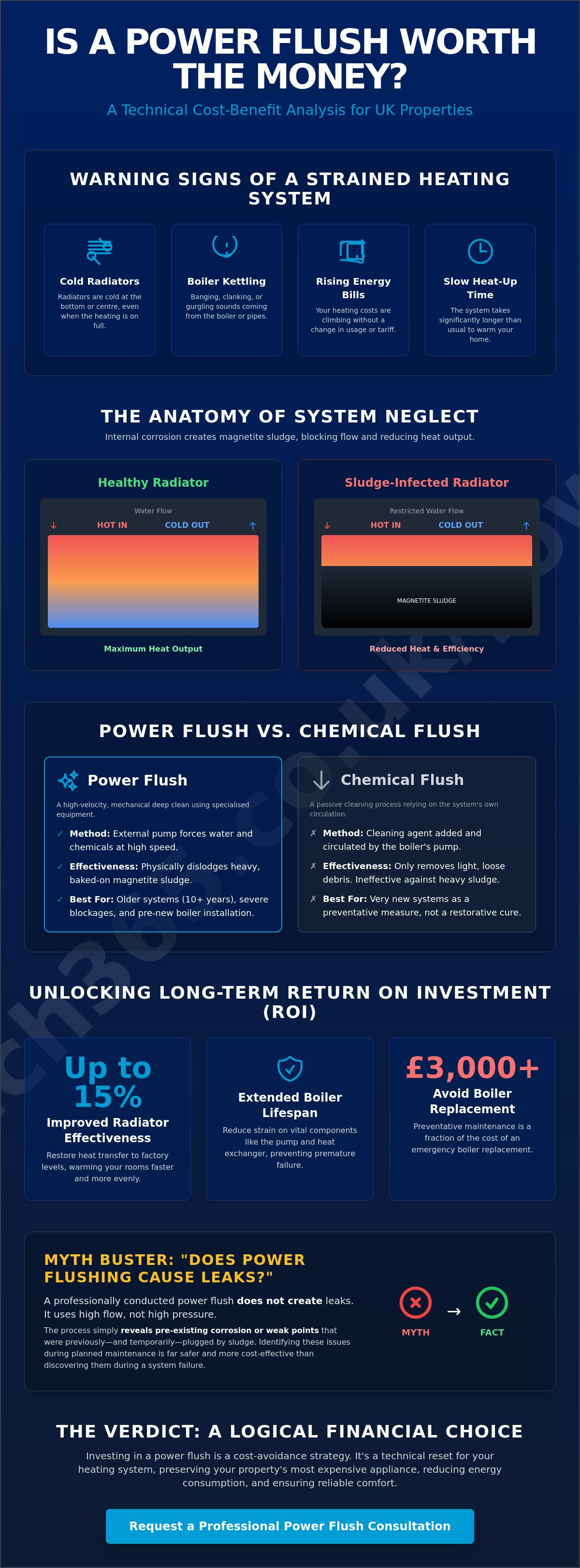
We understand that homeowners often hesitate when faced with maintenance quotes, wondering is a power flush worth the money or if it's merely a stop-gap for a dying appliance. This 2026 cost-benefit analysis provides the clarity you need. We'll demonstrate how a professional power flush can improve radiator effectiveness by up to 15% and significantly extend the lifespan of your boiler through technical restoration.
By the end of this guide, you'll discover the genuine ROI of a deep system cleanse, including how to avoid unnecessary maintenance costs and secure a quiet, efficient home. We'll walk you through the mechanics of sludge removal and the long-term savings that make preventative care a logical financial choice.
Key Takeaways
Differentiate between a basic chemical flush and high-velocity mechanical cleansing to understand why the latter is a more effective investment for older heating systems.
Determine if the initial expenditure is a power flush worth the money by evaluating the long-term ROI of lower energy bills and avoided component failures.
Discover how removing magnetite sludge can improve radiator heat transfer by up to 15% and prevent the destructive kettling that shortens boiler lifespan.
Clarify the technical process to understand why high-velocity flushing is designed to reveal pre-existing corrosion rather than creating new leaks in your pipework.
Use our diagnostic checklist to identify when a power flush is a mandatory requirement for maintaining manufacturer warranties and system efficiency.
Table of Contents
Understanding the Investment: What is a Power Flush Worth?
A power flush is a specialised maintenance procedure designed to restore the internal health of your central heating system. Unlike a standard flush, this process utilises a high-velocity, low-pressure pumping station to circulate water and heavy-duty chemicals through your pipework and radiators. This mechanical force is specifically engineered to dislodge and remove magnetite, a dense black iron oxide sludge that settles in low-flow areas. When homeowners ask is a power flush worth the money, they're often comparing the immediate bill to the invisible cost of doing nothing.
To better understand the mechanical process involved, watch this helpful video:
From a specialist perspective, a power flush is about restoring system equilibrium. It isn't a luxury; it's a technical necessity for systems that have become sluggish or noisy. We distinguish between price and value by looking at the total cost of ownership. The price is the one-off fee for the professional service, whilst the value is found in the years of reduced energy consumption and the preservation of expensive internal components like the heat exchanger and pump.
The Anatomy of Heating System Neglect
Magnetite forms naturally amongst the metallic components of your heating system as water reacts with steel and iron. Over time, this sludge settles at the bottom of radiators, creating cold spots and forcing the boiler to work significantly harder to reach the desired temperature. You might notice your radiators taking longer to warm up or hear a distinct kettling noise from the boiler unit. These symptoms indicate that the system is struggling against internal blockages that a simple chemical additive cannot resolve.
Asset Preservation vs. Reactive Repair
In the field of property maintenance, preventative care is always more cost-effective than reactive repair. Ignoring a build-up of sludge doesn't just result in higher bills; it places immense strain on the boiler, often leading to premature failure of the diverter valve or the main pump. By choosing to invest in a Central Heating Power Flush, you're opting for asset preservation over the high-stress environment of an emergency breakdown. A professional power flush acts as a technical reset button, returning your heating system to its original factory efficiency and ensuring domestic comfort. When considering is a power flush worth the money, remember that it's a cost-avoidance strategy designed to protect your most expensive home appliance.
Power Flush vs. Chemical Flush: Which Offers Better Value?
Choosing between a professional power flush and a standard chemical flush is often where homeowners struggle to determine the best path forward. Whilst both aim to clean the system, the methods are fundamentally different. A chemical flush is a passive process; it involves pouring a cleaning agent into the system and allowing the boiler's own pump to circulate it for a short period before draining. If your system is older than 10 years, this approach is often insufficient. It's like trying to wash a muddy vehicle with a spray bottle rather than a jet wash. When asking is a power flush worth the money, the answer lies in the mechanical force required to shift heavy, baked-on magnetite that chemicals alone cannot dissolve.
In contrast, a Central Heating Power Flush is an active, mechanical intervention. It requires a full day of professional labour and specialised high-velocity equipment. This machine takes over the circulation, moving water at high speeds to physically scrub the internal walls of your pipework and radiators. For properties managed to high facility standards, this is the only recognised "deep clean" solution that guarantees the removal of significant debris. If you're unsure which method suits your property, consulting a professional power flush service can provide a definitive diagnostic assessment.
When a Chemical Flush is Sufficient
A chemical flush has its place in a proactive maintenance schedule. It's typically sufficient for newer systems (under five years old) that show no signs of cold spots or noisy operation. It also serves as a mandatory preparatory step under UK building regulations for heating systems (specifically BS 7593:2019) when installing a new boiler. However, it's a surface-level treatment. It cannot clear significant boiler blockages or restore a heavily contaminated system to its original efficiency.
Why the Power Flush Commands Premium Pricing
The higher cost of a power flush reflects the intensity of the work and the expertise required. A technician doesn't just "run a machine"; they isolate and flush each radiator individually to ensure every corner of the system is cleared. We also perform TDS (Total Dissolved Solids) testing post-flush to verify that the water quality matches the mains supply. This level of thoroughness is why many technicians argue that is a power flush worth the money is best answered by the peace of mind it provides. You aren't just paying for a clean; you're paying for a verified restoration of your home's most vital asset.
Calculating the ROI: Energy Bills and Boiler Lifespan
Determining whether is a power flush worth the money requires looking beyond the initial invoice. The primary return on investment comes from restoring the thermal conductivity of your heating system. Magnetite sludge is a poor conductor of heat; when it coats the internal surfaces of your heat exchanger, it acts as an unwanted layer of insulation. This means your boiler must burn more gas to achieve the same water temperature. By removing these deposits, you ensure that the energy you pay for is actually being transferred into your living space rather than being wasted through the flue.
This process is also a critical component of Boiler Blockage Clearance. When sludge is cleared, the circulation pump no longer has to struggle against the increased viscosity of contaminated water. A clean system reduces the electrical load on the pump and eliminates the "kettling" noises caused by localised overheating. These mechanical improvements aren't just about comfort; they're about restoring the system to its peak operational efficiency.
Impact on Monthly Energy Consumption
When radiators have cold spots, your thermostat often remains unsatisfied. This leads to "over-firing," where the boiler runs for longer periods to compensate for the lack of heat output from blocked radiators. Data from the Energy Savings Trust suggests that removing corrosion deposits can improve a radiator's effectiveness by up to 15%. In the context of 2026 energy costs, some industry reports indicate potential savings of up to 25% on annual bills. Most homeowners find that these fuel savings allow the service to pay for itself through reduced outgoings within two to three years.
Extending the Life of Your Boiler
The financial logic becomes even clearer when you compare preventative maintenance to the cost of a total system failure. Sludge is the leading cause of premature pump failure and heat exchanger blockages in the UK. Maintaining your system in accordance with BS 7593:2019 standards isn't just a recommendation; it's often a requirement for manufacturer warranty compliance. When you consider that a new boiler installation can cost between £2,500 and £4,000, the investment in a professional flush represents a substantial saving. It's the difference between a controlled maintenance spend and an emergency capital expenditure. Ultimately, when you ask is a power flush worth the money, the answer is found in the years of trouble-free operation and the avoidance of a premature system replacement.
Addressing the Risks: Does Power Flushing Cause Leaks?
A common concern amongst homeowners is the fear that the flushing process will "blow" their radiators or cause widespread leaks. This anxiety is often fuelled by online forums suggesting that the machine's force is too aggressive for older pipework. However, this stems from a fundamental misunderstanding of the physics involved. A professional power flush utilises high velocity, not high pressure. In fact, the pressure exerted by a flushing pump is typically less than 2 bar, which is comparable to the pressure your system handles during a standard mains refill.
It's vital to differentiate between a flush causing a leak and a flush revealing a pre-existing corrosion hole. Over years of neglect, internal corrosion can eat through the metal of a radiator or pipe. Magnetite sludge often settles over these pinholes, acting as a temporary, brittle seal. When the system is cleaned, this debris is removed, which may expose the underlying damage. While this can be inconvenient, it's far safer to identify these vulnerabilities during a controlled maintenance visit than to suffer a catastrophic failure when the system is under full load in the depths of winter. When evaluating is a power flush worth the money, the risk of exposing a leak should be viewed as a diagnostic benefit rather than a deterrent.
Managing Older Heating Systems
Very old iron pipework or microbore systems require a more nuanced approach. Expert technicians often use thermal imaging cameras before the work begins to identify specific blockages and assess the overall integrity of the system. This diagnostic step allows us to adjust the flow rate to suit the specific needs of your property. Ignoring the sludge in these older systems is actually more dangerous; the acidic nature of the contaminated water continues to corrode the metal from the inside out, making a future leak inevitable.
Professional Safeguards and Insurance
The key to a safe procedure lies in the technician's expertise and the quality of the equipment used. Reputable power flush companies follow a strict protocol that includes monitoring system pressure levels constantly throughout the procedure to ensure they remain within safe limits. Professional specialists carry public liability insurance and technical certifications, providing a layer of protection that DIY attempts simply cannot match. After the cleaning is complete, we add high-grade corrosion inhibitors to the system to prevent the return of magnetite and protect the freshly cleaned metal surfaces. Ultimately, is a power flush worth the money because it combines deep restoration with professional risk management, ensuring your home remains both warm and dry.
The Verdict: Is It Worth the Money for Your Property?
After analysing the technical restoration, the reduction in energy consumption, and the preservation of expensive boiler components, the conclusion for most UK homeowners is clear. When you consider the high cost of fuel and the even higher price of a premature boiler replacement, determining is a power flush worth the money becomes a matter of simple arithmetic. The investment is most justified when you are installing a new boiler, as it protects your warranty, or when your current system shows clear signs of internal contamination.
For most well-maintained homes, a professional power flush is a "once-per-decade" requirement. It isn't a recurring annual expense like a boiler service, but rather a deep-cleansing restorative procedure. If your system is fitted with a high-quality magnetic filter and receives regular inhibitor top-ups, the benefits of a single flush can last for ten years or more. This longevity makes the initial outlay one of the most cost-effective maintenance tasks in a property manager's arsenal. However, every heating system is unique, and we always recommend a professional consultation to verify the specific needs of your pipework.
Critical Signs You Should Invest Now
If you're still weighing up whether is a power flush worth the money for your specific situation, use this diagnostic checklist to assess your system status. If you recognise more than two of these symptoms, your system is likely suffering from significant magnetite build-up:
Radiator Cold Spots: The bottom or centre of the radiator remains cold whilst the top is hot, indicating settled sludge.
Slow Heat-Up Times: The house takes significantly longer to reach the thermostat's target temperature than it did previously.
Boiler Noises: You hear banging, whistling, or a sound like a boiling kettle (kettling) coming from the boiler unit.
Contaminated Water: When you bleed your radiators, the water appearing is thick, black, or contains visible grit.
Frequent Restarts: The boiler frequently cuts out or requires resetting due to poor circulation or overheating.
Securing Your Heating Future
The ultimate value of this service lies in the peace of mind that comes with a verified clean system. Once the sludge is removed and the equilibrium is restored, you can focus on maintaining those results through annual servicing and the installation of an in-line magnetic filter. These simple steps ensure that the efficiency gains you've paid for aren't lost to new corrosion over the coming years. For a deeper dive into the technical stages of the procedure, refer to The Professional Central Heating Power Flush Service Guide. By taking a proactive approach to your property's infrastructure, you aren't just fixing a heating problem; you're safeguarding your home's comfort and your financial future.
Secure Your System’s Long-Term Efficiency
Maintaining a central heating system is a core responsibility of property ownership. We've explored how mechanical sludge removal restores heat distribution and boiler efficiency, ensuring every kilowatt of energy is used effectively. By addressing magnetite build-up before it causes component failure, you're choosing a disciplined approach to asset preservation. When evaluating is a power flush worth the money, the technical evidence points to significant long-term savings. The cost of a professional cleanse is a small fraction of the price of a total boiler replacement; it's a logical financial decision for any homeowner facing rising energy costs.
Our expert maintenance teams operate across the UK, providing a specialist focus on sludge removal to safeguard your domestic comfort. Don't wait for a total system failure to take action. Request a Professional Power Flush Consultation today to ensure your heating system remains quiet, efficient, and reliable for years to come. Restoring your home's warmth is a straightforward step toward lasting peace of mind.
Frequently Asked Questions
How much does a professional power flush typically cost in the UK?
The cost of a professional power flush varies depending on the size of your property and the number of radiators in your heating system. A small apartment with five radiators requires less time and chemical treatment than a large detached home with fifteen. Other factors include the severity of the sludge build-up and the accessibility of the pipework. It is best to obtain a technical assessment to determine the specific investment required for your home.
Can I perform a power flush myself to save money?
No, you should not attempt a DIY power flush because it requires specialised high-velocity pumping equipment and technical expertise. Professional machines are expensive to hire and difficult to operate without training; incorrect usage can lead to air locks or system damage. A specialist ensures that chemicals are handled safely and that the system is correctly balanced and inhibited after the procedure is complete to prevent future corrosion.
How long does the effect of a power flush last?
The results of a professional flush typically last between five and ten years for most UK homes. This duration depends heavily on whether you have a magnetic filter installed and if you maintain the correct levels of chemical inhibitor. Regular annual servicing helps to monitor the water quality and ensures that the system remains free from new magnetite deposits for as long as possible, protecting your boiler's internal components.
Is a power flush necessary before installing a new boiler?
Yes, flushing the system is a mandatory requirement under UK Building Regulations (Part L) and British Standard BS 7593:2019 when installing a new appliance. Most manufacturers will void your warranty if the new boiler is connected to a dirty, sludge-filled system. This step ensures that the new heat exchanger isn't immediately contaminated by old debris, protecting your significant financial investment from day one.
Will a power flush fix radiators that are cold at the bottom?
Yes, cold spots at the base of a radiator are a classic sign of settled magnetite sludge that a power flush is designed to remove. The high-velocity water flow physically dislodges this heavy debris, allowing hot water to circulate through the entire radiator surface again. This restoration is one of the main reasons why homeowners find that is a power flush worth the money when they experience uneven heating.
What happens if I ignore the sludge in my heating system?
Ignoring sludge leads to increased energy bills, noisy boiler operation, and eventually a total system breakdown. Over time, the acidic nature of the magnetite causes internal corrosion, leading to pinhole leaks and damaged pumps. The cost of replacing a failed boiler or repairing water damage far exceeds the price of preventative maintenance; this makes neglect a high-risk financial strategy for any property owner or facility manager.
How long does the actual power flushing process take?
A thorough power flush usually takes between six and ten hours to complete in a standard residential property. This timeframe allows the technician to isolate and clean each radiator individually, ensuring that all debris is flushed out of the pipework. Large properties or heavily contaminated systems may require additional time to reach the required water clarity standards, which are verified by TDS testing before the system is recommissioned.
Does a power flush affect my boiler warranty?
A professional power flush actually protects and validates your boiler warranty rather than negatively affecting it. Most manufacturers stipulate that the central heating system must be clean and treated with inhibitor to maintain the warranty coverage. By proving that the system has been maintained to BS 7593 standards, you ensure that you remain covered for any future mechanical faults. When considering is a power flush worth the money, the protection of your warranty is a vital benefit.


Comments