

What is Central Heating Inhibitor? A Property Maintenance Guide to System Longevity
- Darrell Willamson
- Jun 15
- 13 min read
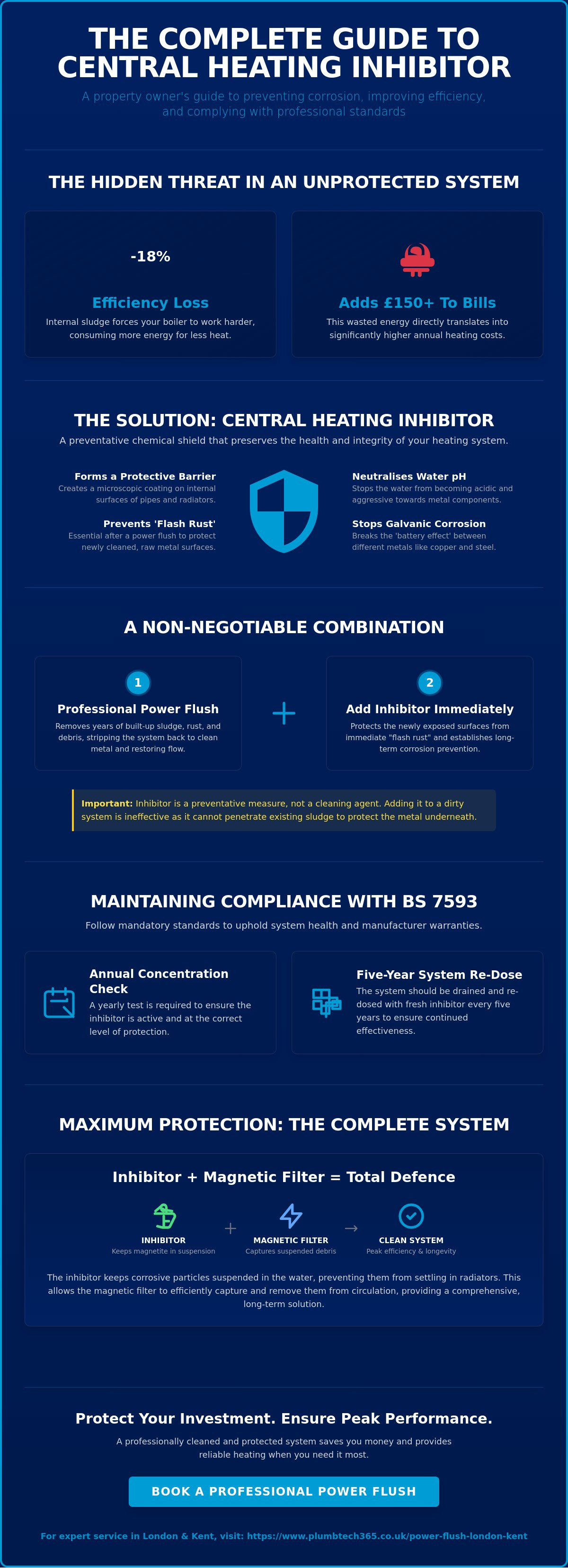
Did you know that a neglected heating system can lose up to 18% of its efficiency, potentially adding £150 to your annual energy bills? Many property owners only encounter water treatment when a boiler starts making unusual noises, leading them to ask: what is central heating inhibitor? It's far more than a simple additive; this liquid acts as a critical chemical shield that halts the internal corrosion and sludge formation that quietly compromises your radiators and pipework.
It's perfectly natural to feel overwhelmed by technical jargon whilst worrying about the threat of an expensive heat exchanger failure. You want a home that stays warm and a system that remains compliant with manufacturer warranties. This guide explains how inhibitor works to safeguard your property and why the updated BS 7593 regulations now mandate annual concentration checks. We'll outline how to maintain peak efficiency, reduce your gas bills, and why re-dosing is the essential final stage of a professional power flush.
Key Takeaways
Understand exactly what is central heating inhibitor and how its sacrificial chemical components create a protective barrier inside your radiators.
Learn why applying inhibitor is a critical requirement after a power flush to prevent the "flash rust" phenomenon on cleaned internal surfaces.
Stay compliant with BS 7593 regulations by following the mandatory schedule for annual concentration checks and five-year system re-dosing.
Discover the practical steps for dosing your system correctly, whether you're managing a modern combi or a traditional open-vented setup.
Explore how inhibitors work alongside magnetic filters to keep magnetite in suspension, ensuring it is successfully captured rather than sticking to pipes.
Table of Contents
What is Central Heating Inhibitor and How Does it Work?
When a heating engineer mentions water treatment, the first question most property owners ask is: what is central heating inhibitor? In plain terms, it's a multi-component chemical solution designed to preserve the integrity of your boiler, radiators, and pipework. Without it, the water circulating through your home becomes a corrosive cocktail that slowly eats away at the metal components from the inside. This degradation leads to leaks, reduced efficiency, and eventually, total system failure.
This liquid works by introducing sacrificial chemicals into the system. These chemicals seek out the internal surfaces of your radiators and pipes to create a microscopic protective coating. By acting as a Corrosion Inhibitor, the solution prevents the chemical reactions that lead to rust. This process also helps maintain the water's pH levels, ensuring it stays neutral rather than becoming acidic and aggressive. High-quality inhibitors typically contain both anodic and cathodic components. Anodic inhibitors target the specific spots where metal is most likely to dissolve, whilst cathodic inhibitors form a protective film over the entire surface to block oxygen from reaching the metal.
To better understand how this chemical protection is applied to a real-world system, watch this helpful video:
The Chemistry of Corrosion Prevention
Most domestic systems contain a mix of copper, steel, and sometimes aluminium. When these different metals are connected by water, they create a "battery effect" known as galvanic corrosion. This electrochemical process causes the less noble metals to corrode rapidly as electrons move between them. A universal inhibitor is specifically formulated to break this electrochemical circuit. It stabilises the environment, ensuring that your copper pipes don't react with your steel radiators. By stopping this circuit, you prevent the metal from breaking down and entering the water stream as debris.
Inhibitor vs. Sludge: Myth-Busting
It's a common misconception that pouring a bottle of inhibitor into a noisy or cold system will fix existing problems. Inhibitor is a preventative measure, not a cleaning agent. It stops new sludge from forming but cannot dissolve heavy blockages that are already restricting flow. In fact, adding chemical protection to a heavily fouled system is often a waste of money because the chemicals cannot reach the metal surfaces through the layers of dirt. Magnetite is the primary byproduct of untreated heating water. To get the best results, you should first perform a central heating power flush to remove this old debris and start with a clean slate.
Why Inhibitor is Essential After a Professional Power Flush
A professional power flush is a restorative process, but it creates a temporary vulnerability within your heating system. When we strip away years of magnetite and limescale, we leave the internal surfaces of your radiators and pipework completely exposed. Without immediate treatment, these "raw" metal surfaces react with the oxygen present in fresh refill water. This reaction creates "flash rust," which can begin within hours of the system being refilled. Understanding what is central heating inhibitor helps property owners see it as the essential "sealant" that locks in the benefits of a clean system. It's the final, non-negotiable step that ensures your investment doesn't immediately start to degrade again. In cases of severe neglect, ensuring you've addressed boiler blockage clearance is a vital prerequisite before this protective layer can be effectively applied.
When homeowners ask what is central heating inhibitor, the answer usually lies in its ability to act as a permanent barrier against future decay. It transforms the water from a corrosive threat into a stable heat-transfer medium. This chemical protection is the only way to preserve the high-performance environment created by a thorough cleaning. Without it, the "clean slate" achieved by your engineer will be short-lived, as the cycle of corrosion restarts the moment the boiler is fired up.
Restoring Heat Distribution Efficiency
Radiators often develop cold spots at the top, which many homeowners mistake for trapped air. In reality, this is often hydrogen gas, a byproduct of the corrosion process. By maintaining the correct chemical balance, inhibitor prevents this gas build-up, ensuring even heat distribution across every room. This clean environment is particularly beneficial for the boiler's heat exchanger. When water is free of debris, the heat transfer process is seamless, reducing the energy required to reach your desired temperature. High-quality water also protects the circulation pump from abrasive particles that would otherwise cause premature mechanical wear. This is why many engineers recommend installing Magnetic Boiler Filters alongside chemical treatment for the ultimate defence.
Protecting Your Investment
Think of the small cost of a bottle of inhibitor as a minor insurance premium. Whilst a new boiler installation can easily exceed £2,000, a regular dose of chemical protection costs a fraction of that amount. Clean water reduces the physical strain on delicate internal components like diverter valves, which are prone to sticking when sludge is present. It's also a matter of compliance. Most modern boiler warranties are strictly contingent on the system water being treated according to BS 7593 standards. If you haven't maintained the water quality, you may find your warranty is void just when you need it most. To ensure your system meets these standards, consider booking a professional power flush service to reset your system health.
Professional Standards: BS 7593 and Landlord Compliance
For property managers and landlords, the question of what is central heating inhibitor extends beyond mechanical efficiency into the territory of legal compliance. The British Standard BS 7593:2019 serves as the industry code of practice for preparing and maintaining domestic heating systems. Since its incorporation into Part L of the Building Regulations, these guidelines are no longer merely advisory; they're compulsory. Adhering to these standards ensures that heating systems remain safe, efficient, and habitable for tenants, whilst protecting the landlord's long-term asset value.
When a new boiler is installed, the commissioning engineer must complete the Benchmark logbook. This document acts as a "birth certificate" for the system, confirming that it was cleaned and treated correctly from day one. Failing to produce this record during a service visit can complicate insurance claims and property surveys during a sale. It's a vital piece of property documentation that proves the heating system has been managed with professional discipline and transparency.
The Five-Year Maintenance Cycle
Professional maintenance requires more than a "fit and forget" approach. The current standards mandate a specific lifecycle for water treatment to prevent the gradual accumulation of corrosive debris. Facility managers should ensure their maintenance schedules include:
Annual concentration checks: Every service must verify that the inhibitor levels are sufficient to maintain protection.
Five-year intervention: Systems must be re-dosed with inhibitor every five years, or a laboratory water test must confirm the quality remains within acceptable parameters.
In-line filtration: An in-line magnetic filter is now a mandatory requirement alongside chemical protection to capture any circulating magnetite.
Documentation is key here. Every dosing event should be recorded in the boiler’s Benchmark logbook to provide a clear audit trail for compliance purposes.
Boiler Warranty Protection
Manufacturers like Worcester Bosch and Vaillant take water quality seriously. It's common practice for engineers to take a water sample during a warranty visit. If the lab results show high levels of magnetite or a total absence of chemical protection, the repair claim will likely be rejected. Dirty water remains the leading cause of component failure in modern boilers. By maintaining a record of what is central heating inhibitor dosing and keeping receipts for professional water treatment services, you create a "paper shield" for your warranty. This evidence proves you've met your obligations as a property owner, ensuring that expensive repairs are covered by the manufacturer rather than your own maintenance budget.
How to Keep Your Heating System Clean: A Dosing Guide
Maintaining a clean system requires a methodical approach that prioritises safety and technical accuracy. Once you understand what is central heating inhibitor and its protective role, the next logical step is correct application. Dosing isn't a "one size fits all" task; the method depends entirely on your property's plumbing configuration. Whether you're a facility manager overseeing a commercial site or a homeowner performing routine care, following a structured sequence ensures the chemicals are distributed effectively without damaging sensitive components.
To ensure your system remains protected, follow these five essential steps:
Step 1: Identify your system type. Check your loft for a small feed and expansion (F&E) tank. If one exists, you have an open-vented system. If not, you likely have a pressurised or "sealed" system, such as a combi boiler.
Step 2: Isolate and release pressure. Turn off the boiler and allow the water to cool. For pressurised systems, you must release the internal pressure via a drain cock or a radiator bleed valve before attempting to add any fluid.
Step 3: Select the correct entry point. Open-vented systems are dosed via the F&E tank. For sealed systems, you can use a towel rail, a standard radiator, or a dedicated filling loop adapter.
Step 4: Administer the correct dosage. The standard ratio is typically 1 litre of liquid inhibitor for every 10 radiators. Larger properties or those with underfloor heating circuits will require additional bottles to maintain the correct concentration.
Step 5: Re-pressurise and circulate. Close all valves, restore the system pressure to approximately 1.5 bar (for sealed systems), and run the heating for at least an hour to ensure the chemicals reach every corner of the pipework.
Adding Inhibitor to a Combi Boiler System
Modern combi systems often require "concentrate" cartridges rather than large liquid bottles. These are injected directly into a radiator bleed valve using a standard caulking gun. It's a clean and efficient method, but you must be careful not to over-pressurise the expansion vessel whilst injecting the gel. A useful tip for property maintenance is to use a bathroom towel rail as your entry point. These are usually the highest point in the system and are easiest to drain slightly to make room for the new chemicals without causing a mess on floorings.
Testing and Monitoring Water Quality
Dosing the system is only half the battle; you must also monitor its health. An annual concentration check using a chemical test kit is the best way to verify that the inhibitor hasn't been diluted by fresh water top-ups. You should also perform a "turbidity" test by drawing a small sample of water. Clear or slightly straw-coloured water indicates a healthy system, whilst black, opaque water suggests that magnetite is already present. For complex commercial systems, we recommend professional laboratory analysis to ensure full compliance with safety standards. If your water sample remains dark even after dosing, you likely need a professional power flush to reset the system's baseline health.
The Ultimate Defence: Inhibitors and Magnetic Filters
A magnetic filter serves as the physical sentry for your heating system, but its effectiveness depends entirely on chemical support. Whilst we've already established what is central heating inhibitor as a corrosion preventer, its secondary role is equally vital: it acts as a dispersant. This chemical property keeps microscopic magnetite particles "slippery" and in suspension within the system water. Instead of settling in the bottom of your radiators or clogging the heat exchanger, these particles continue to circulate until they pass through the magnetic filter's powerful field. Without this chemical assistance, a filter can only catch the debris that happens to float past, leaving the majority of sludge to accumulate in low-flow areas of your property.
Maintaining this defence is a straightforward process that should be integrated into your annual boiler service. Your engineer will isolate the filter and remove the internal magnet to clean the protective sleeve. This simple act of removing the captured black sludge prevents the filter from becoming a restriction itself. When you combine this physical filtration with a high-quality chemical inhibitor, you create a self-cleaning environment that preserves the results of a professional power flush for the long term.
Why One Without the Other is Incomplete
Relying on a filter alone is a reactive strategy. A magnetic filter is excellent at catching the results of corrosion, but it cannot stop the chemical process from occurring in the first place. Conversely, inhibitor can halt new decay, but it lacks the power to "hide" or remove the heavy sludge already circulating in an older system. For the highest level of protection, property managers should follow the "Gold Standard" maintenance sequence:
Power Flush: Perform a thorough Central Heating Power Flush to remove decades of accumulated magnetite and reset the system to a clean state.
Filter Installation: Fit a high-quality magnetic filter to provide a permanent physical trap for any future debris.
Chemical Inhibition: Dose the system to create the chemical barrier that stops fresh corrosion from starting.
This three-pronged approach ensures your system remains as efficient as the day it was commissioned, protecting every component from the boiler's pump to the furthest radiator.
Actionable Maintenance Strategy for 2026
The regulatory landscape in 2026 requires a more disciplined approach to water treatment. To maintain peak efficiency and safeguard your boiler warranty, your annual maintenance routine should include three specific checks. First, ensure your engineer cleans the magnetic filter's internal sleeve. Second, they must perform a concentration test to verify what is central heating inhibitor levels remain effective. Finally, a visual water quality check will confirm if the system requires a more intensive intervention. Following this routine can lead to annual energy savings of up to £150 by preventing the efficiency losses associated with sludge build-up.
Whilst homeowners can use DIY kits to monitor concentration levels or top up chemicals via a towel rail, complex tasks like filter installation or deep system cleaning require a specialist. If your radiators have persistent cold spots or your boiler is making unusual noises, it's time to bring in the experts. Ready to restore your system's longevity? Book a professional power flush today to protect your property and lower your gas bills.
Future-Proof Your Property's Heating Health
Maintaining a reliable heating system requires a proactive mindset and a commitment to regulatory compliance. By following the mandatory five-year re-dosing cycle and ensuring your magnetic filter is cleaned annually, you prevent the silent degradation that leads to catastrophic boiler failure. It's much easier to prevent corrosion than to repair a failed heat exchanger. Now that you've discovered what is central heating inhibitor and how it acts as a chemical shield, you can take control of your system's longevity and efficiency.
We are specialists in BS 7593 compliance, providing expert sludge and magnetite removal to restore efficiency to London and Kent homes. Don't wait for a cold radiator or a noisy pump to signal a problem. You can safeguard your domestic comfort and reduce your gas bills with a single professional visit that resets your system's health.
Book Your Professional Power Flush & System Protection Service today and enjoy a quieter, more efficient home for years to come.
Frequently Asked Questions
How often should I add central heating inhibitor to my system?
You should check the concentration levels annually during your boiler service to ensure the system remains protected. According to current British Standards, you must re-dose the system every five years or perform a laboratory water test to confirm the protective levels are still adequate. If you've recently drained the system for repairs, you must add fresh inhibitor immediately to replace the chemicals lost during the process.
Can I mix different brands of central heating inhibitor?
It is advisable to avoid mixing different brands of inhibitor whenever possible. Whilst most high-quality chemicals are compatible, different manufacturers use varying chemical formulations to achieve protection. Mixing them can occasionally lead to a less effective protective barrier or, in rare cases, cause a chemical reaction that creates sediment. If you're unsure what's already in your system, a full flush is the safest approach for your property.
What happens if I don't use a central heating inhibitor?
Without chemical protection, your system water will react with the metal components to create black iron oxide, commonly known as magnetite. This sludge settles in radiators, causing cold spots and forcing the boiler to work harder to reach temperature. Over time, this leads to higher energy bills, frequent pump failures, and the eventual destruction of the boiler's heat exchanger, which can be an expensive repair.
Can you add too much inhibitor to a heating system?
Adding slightly more than the recommended dose won't typically harm your system, but excessive over-dosing is a waste of resources. In extremely high concentrations, some chemical formulations can potentially affect the integrity of rubber seals or gaskets over long periods. Always follow the manufacturer's guidance, which usually specifies one litre of product for every ten radiators in a standard domestic property to maintain the correct balance.
How do I know if my central heating inhibitor is still working?
You can't determine chemical health just by looking at the water colour. To accurately assess what is central heating inhibitor effectiveness, you must use a dedicated chemical test kit during your maintenance routine. These kits use a reagent that changes colour to indicate if the concentration is high enough to provide full corrosion protection, giving you peace of mind that your system is safe.
Does central heating inhibitor remove existing sludge from radiators?
No, inhibitor is purely a preventative treatment and lacks the acidity required to break down heavy debris. It is designed to stop new corrosion from occurring rather than removing existing blockages that are already restricting flow. If your radiators are already heavy with sludge or have significant cold spots, you'll need a professional power flush to physically remove the debris before adding inhibitor to protect the clean system.
Is it safe to add inhibitor myself, or do I need a plumber?
Adding inhibitor is a manageable DIY task for many property owners, particularly when using a towel rail or an open-vented expansion tank. However, if you have a pressurised system and aren't comfortable with releasing pressure or using a caulking gun adapter, it's safer to hire a professional. A qualified engineer will also ensure the system is correctly balanced and vented after the procedure to prevent air locks.
Will inhibitor stop my boiler from making a kettling noise?
Inhibitor won't stop existing kettling noises if they're caused by a build-up of limescale or sludge already sitting on the heat exchanger. Kettling occurs when water becomes trapped behind debris and turns to steam, creating a banging sound. Whilst inhibitor prevents the future accumulation of these deposits, you'll need a chemical descaler or a power flush to resolve an existing noise issue and restore quiet operation.


Comments