

How to Keep Your Heating System Clean After a Power Flush
- Darrell Willamson
- Jun 15
- 12 min read
Investing in a professional power flush is a clinical reset for your home, but it isn't a permanent shield against future decay. Many homeowners worry about how to keep heating system clean after flushing, fearing that after spending their hard-earned money to clear out black iron oxide, the sludge will simply start building up again. It's a valid concern, especially when you consider that internal corrosion is a silent process that can quietly void your boiler warranty if the system isn't correctly maintained.
We understand that you want to protect your investment and maintain the efficiency gains you've just achieved. This guide explains the professional maintenance steps required to safeguard your pipework through a combination of chemical, mechanical, and manual care. You'll discover the secrets to preventing future blockages, from the necessity of magnetic filters to the essential role of chemical inhibitors. By following this clear maintenance schedule, you can ensure your energy bills stay low and your radiators remain hot for years to come.
Key Takeaways
Understand why high-quality chemical inhibitors are the essential first line of defence against electrolytic corrosion and internal pipework decay.
Learn how a magnetic system filter acts as a permanent mechanical guard to capture debris mobilised by chemical treatments.
Discover the practical monitoring habits, such as tracking radiator temperature consistency, that show you how to keep heating system clean after flushing.
Recognise the importance of professional annual health checks and detailed record-keeping to ensure your boiler's manufacturer warranty remains valid.
Table of Contents
The Post-Flush 'Reset': Why Maintenance is Essential for System Longevity
A professional power flush provides a "clean slate" for your property's heating infrastructure. It's a clinical reset that restores the internal surfaces of radiators and pipework to their original state by removing years of accumulated debris. However, many homeowners mistakenly view this as a one-time fix. To understand how to keep heating system clean after flushing, you must first recognise that the underlying chemistry of your system hasn't changed. The flush removes the symptoms, but the cause of the problem, the natural reaction between metal and water, remains a constant threat.
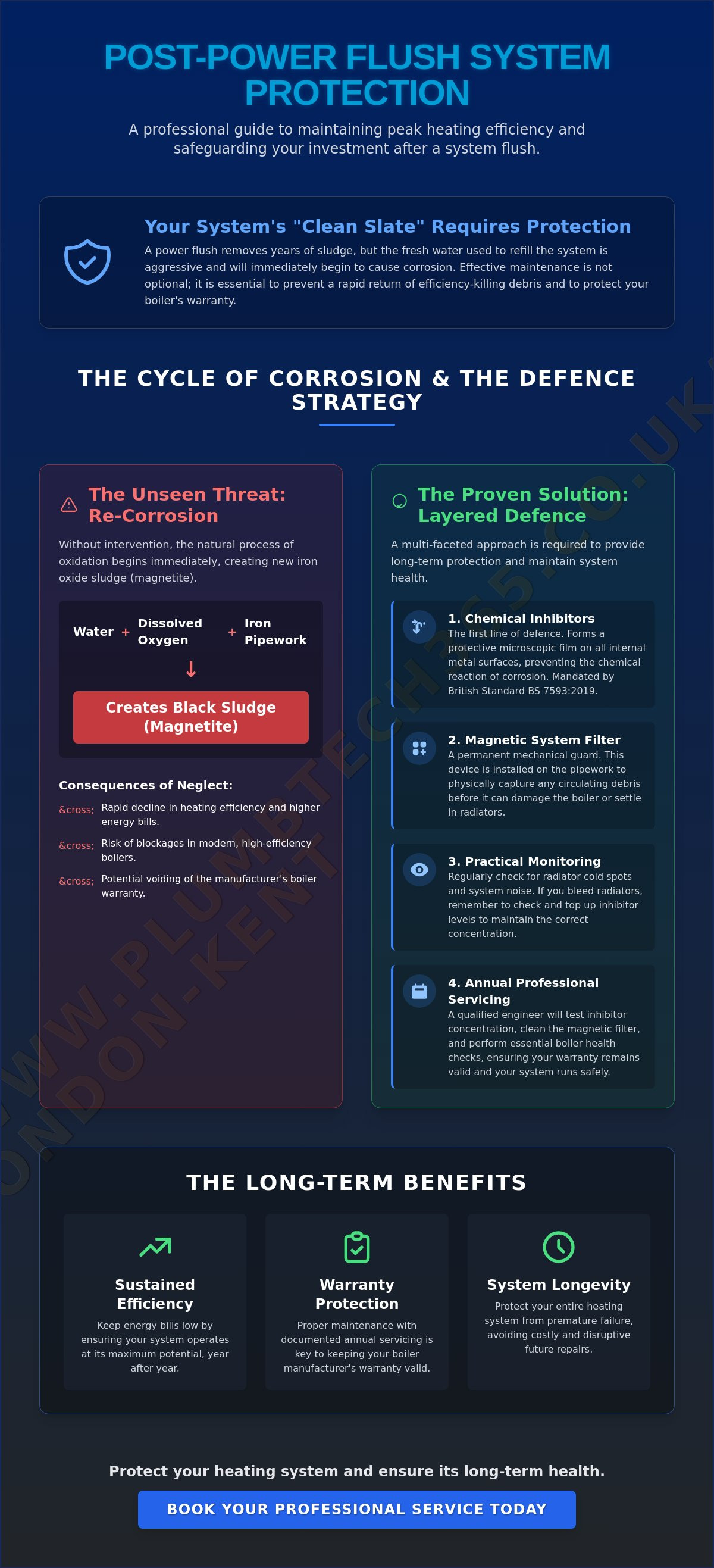
The moment you refill a system with fresh mains water, a natural process called oxidation begins. When water and dissolved oxygen react with the iron components of your radiators, it creates magnetite, which is the black iron oxide sludge that caused your initial problems. Without intervention, this process is relentless. The primary goal of post-flush maintenance is to chemically and mechanically inhibit this oxidation permanently so you don't find yourself back at square one within a few years.
To better understand the mechanical process of cleaning a central heating system, watch this helpful video:
Understanding the 'Clean Slate' Effect
Immediately following a professional flush, your radiators should feel hot from top to bottom with no cold spots. Boiler noise, often caused by "kettling" or debris trapped in the heat exchanger, typically vanishes. Whilst the system feels brand new, the fresh tap water used to refill it is actually quite aggressive. It contains minerals and dissolved oxygen that, if left untreated, will immediately begin attacking the metal surfaces. You've achieved a clean slate, but it's a fragile one that requires immediate protection to remain efficient.
The Risks of Neglecting a Flushed System
Neglect leads to a rapid return of "black dust." In a newly cleaned system, magnetite can begin to settle within weeks if the water isn't properly treated with chemical inhibitors. Modern high-efficiency boilers are particularly vulnerable because their heat exchangers have very narrow waterways designed for maximum heat transfer. Even a small amount of returning debris can cause a significant drop in efficiency or lead to a total breakdown. This is why boiler blockage clearance is a common requirement for properties where maintenance was ignored after a flush. Knowing how to keep heating system clean after flushing is the difference between a decade of comfort and a premature system failure.
Chemical Inhibitors: The First Line of Defence Against Internal Corrosion
Once the physical debris is removed, the focus shifts to chemical preservation. BS 7593:2019 is the British Standard that governs the preparation and maintenance of domestic central heating systems. It mandates that every system must be treated with a high-quality inhibitor to prevent the return of sludge. This chemical layer is the primary answer to how to keep heating system clean after flushing. Without it, the fresh water you've just introduced will begin to corrode your radiators from the inside out within days.
The dosing process involves injecting a concentrated liquid or gel into the system, typically via a radiator bleed valve or a dedicated filling loop. It's vital to remember that this protection is only effective if the concentration remains stable. If you ever need to drain the system for a repair or even bleed a significant amount of air from a radiator, you must top up the inhibitor levels. Following these guidelines ensures proper maintenance of your system's efficiency over the long term. You can find more advice on system care on our maintenance blog.
How Corrosion Inhibitors Work
Inhibitors work at a microscopic level by forming a protective molecular film over all internal metal surfaces. This barrier prevents the electrochemical reaction that leads to pitting and rust. Amongst different metal types, such as copper pipework and aluminium heat exchangers, the inhibitor ensures that electrolytic corrosion cannot take hold. Specifically, inhibitors neutralise the pH level of system water to keep it in a non-aggressive state. This is a fundamental step in how to keep heating system clean after flushing, as it addresses the root cause of magnetite formation.
Maintaining Chemical Concentration Levels
Chemical levels naturally deplete over time. Micro-leaks, which you might not even notice, or routine maintenance like radiator bleeding, slowly dilute the concentration. We recommend using a simple inhibitor test kit every year during your boiler service to verify that the protection is still adequate. Don't be tempted by budget alternatives; professional-grade chemicals provide a more robust barrier and better long-term stability. If you're unsure about the current state of your system, seeking a professional assessment can help prevent future blockages and ensure your boiler remains within its warranty terms.
Installing and Maintaining a Magnetic System Filter
While chemical inhibitors provide the invisible shield your system needs, a magnetic filter acts as the physical sentry. It's widely considered the single best mechanical investment you can make to protect your property's assets. Even in a perfectly treated system, trace amounts of metallic debris are inevitable over time. A magnetic filter is designed to intercept these particles before they can reach the sensitive internal components of your boiler. Understanding how to keep heating system clean after flushing requires a mechanical solution to complement the chemical one you've already established.
There is a specific synergy between your chemicals and this hardware. High-quality inhibitors help to "mobilise" microscopic particles, preventing them from sticking to the internal walls of your radiators and instead keeping them in suspension within the system water. This allows the water to carry the debris directly to the magnetic filter. For maximum protection, the filter should always be positioned on the return pipework, just before the water re-enters the boiler. This ensures that the boiler's internal pump and diverter valve are never exposed to abrasive grit that could cause a premature breakdown.
Why Magnetic Filtration is Non-Negotiable
Modern boilers are engineered for high efficiency, which means they contain secondary heat exchangers with incredibly narrow waterways. Even a tiny amount of magnetite can cause a significant restriction in flow, leading to overheating and component failure. A filter captures these minute particles that are too small for a standard mesh strainer to catch. For a deeper look at protecting your infrastructure, you can consult the ultimate 2026 homeowner guide to system maintenance. Relying on chemicals alone is a risk; the magnet provides the fail-safe your boiler deserves.
How to Organise Regular Filter Cleaning
Installing the filter is only half the battle. You must also manage a regular cleaning schedule to ensure it doesn't become saturated. Most modern filters are designed for easy homeowner access, allowing you to monitor your system's health without calling out an engineer for every check. We recommend you check the filter three months after your initial power flush to catch any lingering grit, and then move to an annual inspection thereafter.
Isolate the unit: Turn off the boiler and close the isolation valves on either side of the filter.
Remove the magnet: Unscrew the cap or pull out the magnetic core to release the captured sludge into the filter body.
Flush the debris: Open the drain valve at the bottom of the unit to clear out the collected magnetite.
The visual check: Pay attention to the colour of the discharge. Dense black sludge is normal magnetite, but a sudden shift to orange or brown water suggests fresh oxygen is entering the system and causing active rust.
This simple routine is a vital part of how to keep heating system clean after flushing. It provides a clear, visual indicator of whether your chemical protection is working or if your system needs professional attention.
Practical Monitoring: Keeping the System Running Smoothly
Vigilance is your early warning system. Once you've implemented chemical and mechanical defences, your role shifts to one of oversight. Consistent monitoring is a fundamental part of how to keep heating system clean after flushing. It allows you to identify the subtle shifts in performance that indicate the return of magnetite or the accumulation of lime-scale before they compromise your boiler's health. By acting as the system's supervisor, you can catch minor issues before they escalate into expensive repairs.
You should regularly feel your radiators for temperature consistency across the entire surface. If the heat distribution feels uneven, or if you hear "kettling" sounds, which are whistling or banging noises similar to a boiling kettle, it's a sign that debris is beginning to restrict flow. Similarly, pay attention to the colour of the water when you bleed your radiators. In a healthy, well-protected system, the water should remain clear. If it appears tea-coloured or dark, your inhibitor levels may have dropped, leaving your pipework vulnerable to the oxidation we discussed earlier.
Bleeding Radiators and Checking for Cold Spots
When a radiator is cold at the top, it usually contains trapped air or gas. Whilst air is common, frequent gas build-up in a newly flushed system is often hydrogen, which is a byproduct of active electrolytic corrosion. Systematically check each radiator by hand. Cold spots at the top indicate gas, whereas cold spots at the bottom suggest that sludge is already starting to settle. To bleed a radiator safely, always ensure the boiler is switched off first to prevent more air from being drawn into the pipework. If you find yourself bleeding the same radiator every few weeks, it's time to book a professional system inspection.
Monitoring Boiler Pressure and Circulation
A sealed heating system should maintain a steady pressure, typically between 1.0 and 1.5 bar when cold. If you notice the needle frequently dropping, you likely have a small leak in a valve, joint, or radiator tail. The danger here isn't just the damp patch; it's the fact that every time you top up the pressure via the filling loop, you are introducing fresh, oxygenated water into the system. This fresh water accelerates corrosion and dilutes your protective chemicals. We have previously explored how power flushing restores hot water flow by clearing these blockages. To maintain that flow, you must find and seal even the smallest leaks to keep the system's chemistry stable and the internal surfaces clean.
Long-Term Protection: Annual Servicing and Professional Checks
While the daily monitoring we've discussed is vital, the final pillar of protection is professional oversight. Many homeowners assume that a standard annual boiler service covers the entire heating system, but there is a significant difference between a gas safety check and a comprehensive system health check. A safety check ensures the boiler burns fuel correctly and safely, whilst a health check focuses on the water quality and internal cleanliness of your radiators and pipework. Understanding how to keep heating system clean after flushing means prioritising both aspects of maintenance.
Professional maintenance is the most cost-effective way to avoid the need for a repeat power flush in the future. During a routine visit, an engineer can perform a chemical analysis of your system water to ensure inhibitor levels haven't been diluted by micro-leaks or radiator bleeding. They can also provide a professional "top-up" of high-grade chemicals, which is far more reliable than guessing the dosage yourself. Keeping detailed records of these checks is also essential for protecting your boiler's warranty, as most manufacturers will reject claims if they see evidence of sludge or poor water treatment.
The Importance of the Annual Boiler Service
During your annual service, a qualified technician should do more than just clean the boiler's burner. They must inspect and clean the magnetic system filter, checking for the volume and type of debris captured. This provides a diagnostic window into the system's internal condition. If they find excessive magnetite, they can rectify the chemical balance before a minor issue turns into a major blockage. For those managing larger portfolios or commercial facilities, you can consult a property maintenance company for comprehensive facility care that includes these critical HVAC checks as part of a planned schedule.
When to Consider a Secondary Flush or Top-Up
With perfect aftercare, a domestic system may never require another full-scale power flush. However, older systems with complex pipework or those that have suffered from severe neglect in the past may benefit from a "maintenance flush" every five to seven years. This is a quicker, less invasive, and cheaper alternative to a full power flush, designed to refresh the chemicals and clear out any stubborn trace deposits before they harden. It acts as a preventative measure rather than a reactive cure. By staying ahead of the corrosion cycle, you ensure your home remains efficient and your energy bills stay manageable. Book your professional system health check today to secure your system's longevity and ensure you know exactly how to keep heating system clean after flushing for the long term.
Protecting Your Investment for Years to Come
A professional power flush is a vital restoration project, but it's the maintenance that follows that determines the long-term value of the work. By combining the chemical protection of high-grade inhibitors with the mechanical filtration of a magnetic unit, you create a robust barrier against the return of magnetite sludge. Consistent monitoring of radiator temperatures and boiler pressure ensures you remain in control of your system's health, allowing you to spot active corrosion before it leads to a breakdown.
When you understand how to keep heating system clean after flushing, you move from reactive repairs to proactive asset management. This disciplined approach not only protects your boiler warranty but also ensures your energy bills remain as low as possible through sustained efficiency. As specialists in sludge removal and prevention, our expert technicians serve the entire UK to restore optimal heat distribution and boiler efficiency.
Secure your heating system's future with a professional health check from Hydronetic Power Flush. Our team is ready to help you maintain a reliable and efficient home for years to come.
Frequently Asked Questions
How often should I add inhibitor to my heating system?
You should verify inhibitor levels every year during your boiler service and typically re-dose the system every five years. It's also essential to add more chemicals if you've recently drained the system for repairs or moved a radiator. Using an inhibitor test kit is the most accurate way to ensure your concentration remains at the level required by BS 7593:2019 standards.
Can I clean my magnetic heating filter myself?
Most modern magnetic filters are designed to be cleaned by the homeowner without the need for specialist tools. You simply need to switch off the boiler, isolate the filter valves, and remove the magnetic core to release the captured debris. Regularly flushing this sludge out through the drain valve is a practical step in how to keep heating system clean after flushing.
What colour should the water be in my radiators after a power flush?
The water in your radiators should remain clear following a professional power flush. A very slight straw-coloured tint is normal if you've used certain brands of inhibitor, but the water should never be cloudy, black, or tea-coloured. If the water begins to darken, it suggests that your chemical protection has failed and internal corrosion is starting to reform magnetite.
Is it normal to have to bleed radiators after a power flush?
It is perfectly normal to bleed your radiators a few times in the first week after a flush as dissolved oxygen escapes the fresh water. However, if you find that you're frequently releasing gas after the first month, it may be a sign of a small leak or an active corrosion process. Constant bleeding introduces fresh, corrosive water, which undermines your efforts to maintain a clean system.
Do I really need a magnetic filter if I've had a power flush?
A magnetic filter is a non-negotiable requirement for modern high-efficiency boilers, even after a thorough power flush. While the flush removes the existing buildup, the filter acts as a permanent guard to catch trace particles that form over time. Without this mechanical protection, even small amounts of debris can settle in the narrow waterways of your boiler's heat exchanger, leading to efficiency loss.
How do I know if the sludge is starting to come back?
You can identify returning sludge by checking for cold spots at the bottom centre of your radiators while the heating is on. Other symptoms include a noisier boiler, increased pump strain, or the presence of black grit when you clean your magnetic filter. Monitoring these signs is a core part of how to keep heating system clean after flushing and helps prevent a total system blockage.
Will a power flush invalidate my boiler warranty if I don't do aftercare?
Neglecting system aftercare can lead to a manufacturer rejecting a warranty claim for a failed heat exchanger or pump. Most boiler warranties are conditional on the system being clean and treated with inhibitor according to British Standards. If an engineer finds sludge in a failed component and you have no record of chemical treatment, the repair costs will likely fall on you.
How much inhibitor does a standard UK home require?
A standard 500ml bottle of concentrated inhibitor is typically enough to treat a central heating system with up to 10 radiators. For larger properties or systems with extensive pipework, you may need a second bottle to reach the correct concentration. Always refer to the dosage instructions on the packaging, as over-diluted chemicals won't provide the molecular film needed to prevent corrosion.


Comments