

Heating System Rust Removal: How to Restore Your Central Heating Efficiency
- Darrell Willamson
- Jun 1
- 12 min read
Did you know that poor water quality is the leading cause of heating failures, responsible for the vast majority of system breakdowns in residential properties? It's a frustrating reality for homeowners who see their energy bills rise while their radiators remain stubbornly cold at the bottom. You likely feel that your system is working harder than it should just to provide basic comfort. This drop in performance is usually caused by magnetite, a black sludge that acts as an internal insulator. Professional heating system rust removal is the most effective way to reverse this damage and protect your home.
As a Local Power Flush Company, we know you want a warm home and a quiet boiler without the constant worry of unexpected repair costs. We'll explain the causes of internal corrosion and how a Central Heating Power Flush clears the blockages that steal your heat. You'll learn the technical process of Radiator Sludge Removal and how a Power Flush restores efficiency, lowers your monthly bills, and ensures your system operates at peak performance throughout the coldest months.
Key Takeaways
Identify how magnetite sludge acts as an internal insulator, stealing heat from your rooms and forcing your boiler to work harder.
Learn why professional heating system rust removal is the most effective way to clear blockages and restore full circulation to cold radiators.
Understand the mechanics of a Central Heating Power Flush and how it safely removes years of debris using high-velocity water.
Discover the "Clean, Flush, Protect" industry standard that safeguards your system and ensures compliance with modern building regulations.
Realize how targeted Radiator Sludge Removal can lower your energy bills by improving heat transfer and extending the life of your pump.
Table of Contents
Understanding Heating System Rust & Internal Corrosion
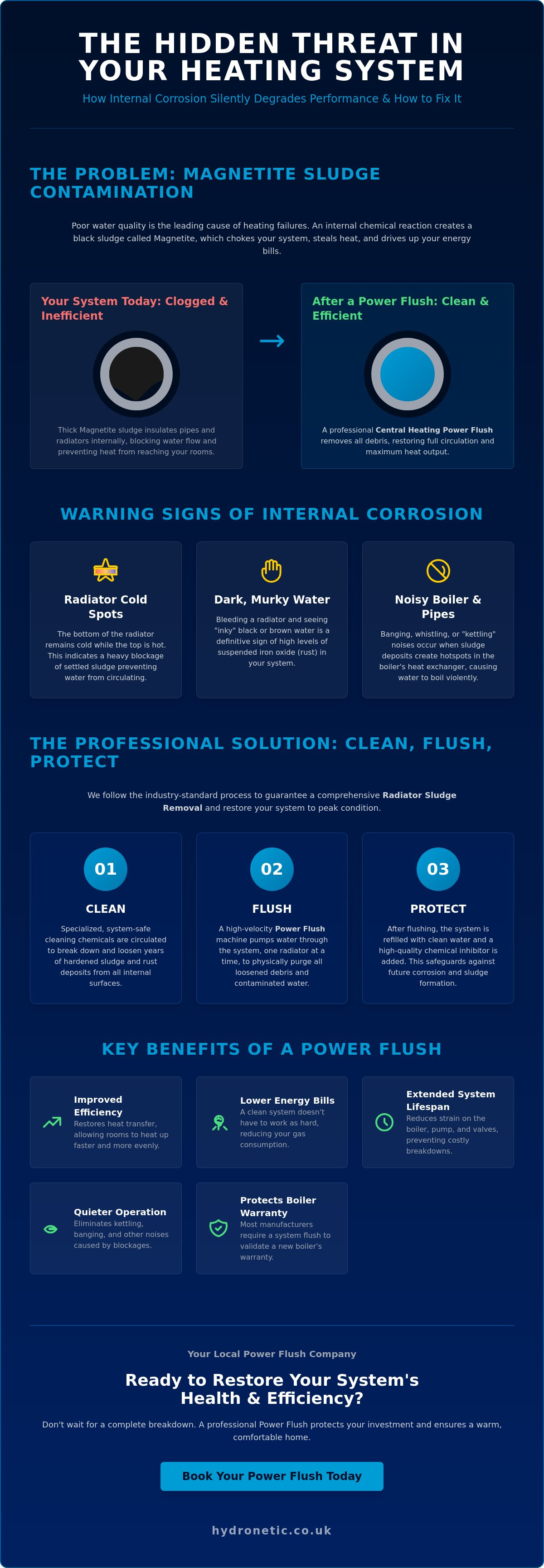
Homeowners often mistake central heating rust for the external oxidation seen on metal tools. However, in a pressurized heating circuit, rust takes the form of magnetite, a dense, black iron-oxide sludge. This substance develops through a chemical reaction between the water in your pipes, residual oxygen, and the various metals within your system. Because this corrosion occurs internally, it's often invisible until the system's performance drops significantly. Industry experts report that poor water quality is the primary driver of mechanical failures, with a majority of central heating breakdowns directly linked to this accumulation of sludge.
While older systems are prone to buildup, modern high-efficiency boilers are particularly vulnerable. To achieve their high ratings, these units use compact heat exchangers with incredibly narrow waterways. Even a thin layer of magnetite can restrict flow, causing the boiler to overheat and cycle frequently. This inefficiency places immense strain on the unit, leading to premature component failure. Professional heating system rust removal is a vital maintenance step that clears these obstructions, ensuring your high-performance equipment operates as intended for its full lifespan.
How Magnetite Sludge Forms Inside Your Pipes
Most residential systems utilize a combination of copper piping and steel radiators. When these dissimilar metals are connected via the water in your system, they trigger a Galvanic corrosion process. This electrochemical reaction causes iron particles to flake away from the inside of your radiators. As these particles circulate, they settle in areas of low velocity, eventually creating a thick, mud-like barrier. Any air entering the system through minor leaks or during maintenance acts as a catalyst, accelerating the oxidation and turning the water into a corrosive liquid that degrades your pump and valves.
Identifying the Symptoms of Internal Oxidation
Recognizing the early warning signs of corrosion can prevent a total system failure. As a Local Power Flush Company, we recommend homeowners watch for these specific diagnostic symptoms:
Radiator Cold Spots: If the bottom of a radiator remains cold while the top is hot, sludge has likely settled at the base, blocking the heated water.
Contaminated Water: Bleeding a radiator and seeing dark, murky, or "inky" water is a definitive sign of suspended magnetite.
Boiler Kettling: Unusual noises, such as whistling or banging, occur when sludge deposits create hotspots within the heat exchanger.
Addressing these issues with a professional Radiator Power Flush restores the balance of your system and prevents the long-term damage caused by internal oxidation.
The Hidden Impact: How Rust Destroys System Efficiency
Magnetite is more than just debris. It forms a layer of sludge that acts as a thermal barrier, effectively insulating the inside of your radiators and preventing heat from entering your home. While you pay for the gas to heat the water, the rust prevents that energy from radiating into your rooms. This process forces you to keep the heating on for longer periods or at higher temperatures to achieve the same level of comfort. Effective heating system rust removal is the only way to strip away this insulating layer and restore the thermal conductivity of your metal surfaces.
The damage extends beyond the radiators. As the water in your system becomes thick with suspended iron oxide particles, it gains a higher viscosity. Your central heating pump is designed to move water, not a dense liquid similar to oil. This increased resistance puts an immense strain on the pump's motor, leading to overheating and eventual burnout. If your system water is dark and heavy, you're essentially forcing your boiler to work under a constant state of overload, which dramatically increases your monthly energy costs.
Neglecting these symptoms often leads to a total system "lockout" during the coldest months of the year. When the internal sensors in a modern boiler detect a lack of flow or a sudden spike in temperature caused by a blockage, the unit will shut down for safety. This leaves you without heat or hot water exactly when you need it most. If you've noticed your radiators taking longer to warm up, a professional assessment from a Local Power Flush Company can identify these issues before they lead to a complete breakdown.
Boiler Blockages and Heat Exchanger Damage
The heat exchanger is the most vulnerable and expensive component of your boiler. In modern condensing units, these components feature incredibly narrow waterways designed to maximize heat transfer. However, these tight channels are easily obstructed by even small amounts of circulating rust. When a blockage occurs, the heat cannot be transferred to the water effectively, causing the metal to crack or the boiler to cycle on and off rapidly. You can read more about the technical details of boiler blockage clearance to understand why these obstructions are so detrimental to system longevity.
Cold Spots and Increased Energy Consumption
Sludge is heavier than water, so it naturally settles at the bottom of radiators. This creates "dead zones" where hot water cannot circulate, leaving the lower half of the radiator cold to the touch. Many homeowners respond by turning up the thermostat, but this only increases fuel consumption without fixing the underlying problem. Industry research indicates that a system contaminated with sludge can be up to 15% less efficient than a clean one. Adhering to the best practice for system maintenance ensures that your radiators output their maximum rated heat, allowing you to lower your thermostat and reduce your bills.
Professional Methods for Heating System Rust Removal
When system performance drops, choosing the correct method for heating system rust removal is essential for lasting results. There are three primary approaches: manual flushing with a standard hose, passive chemical cleaning, and professional power flushing. While manual flushing might clear loose sediment, it lacks the flow rate required to lift heavy, compacted magnetite from the bottom of radiators. A professional Central Heating Power Flush utilizes a specialized pump to circulate water at high velocity but low pressure. This mechanical action scours the internal surfaces of the entire circuit without risking damage to older pipes or joints.
A critical part of this professional service is the use of an external magnetic filtration rig. As the water circulates through the pump, it passes over high-strength magnets that trap suspended iron oxide. This step is vital because it prevents debris from simply moving from one radiator to another. By tackling corrosion in pipework through active filtration, we ensure the system water is returned to a clear, neutral state. As a Local Power Flush Company, we often find that systems treated only with passive chemicals still harbor significant blockages that only mechanical force can dislodge.
Power Flushing vs. Chemical Flushing
Chemical flushing is a passive "pour and wait" method where a cleaning agent circulates during normal operation for several days. It's an appropriate choice for minor maintenance on relatively clean systems. In contrast, a Power Flush is an active mechanical purge. Most manufacturers now recommend this thorough cleaning before installing a new boiler. This prevents old, abrasive sludge from entering and damaging the narrow waterways of a new, high-efficiency heat exchanger, which could otherwise void your equipment warranty.
Why DIY Solutions Often Fail to Clear Deep Rust
DIY attempts often fall short because they can't achieve the necessary turbulence to move settled sludge. A standard garden hose doesn't provide enough pressure to lift heavy magnetite deposits. Additionally, DIY chemicals can loosen large chunks of debris without fully removing them, potentially leading to a sudden Boiler Blockage Clearance being required. Our technicians use thermal imaging cameras to verify the results in real-time. We can see the heat profiles of every radiator, ensuring that every cold spot is eliminated. This transparency is why a professional Radiator Power Flush provides a level of heat restoration that manual methods simply can't match.
Preventing Future Rust Build-up and Protection
Successful maintenance follows the industry-standard "Clean, Flush, Protect" framework. Once the initial debris is cleared, the focus shifts to safeguarding the internal surfaces of your radiators and pipework. Under the BS 7593:2019 code of practice, this proactive approach is no longer optional; it's a regulatory requirement for maintaining a healthy system. By implementing a multi-layered protection strategy, you ensure that your boiler operates at peak efficiency and avoid the recurring costs of emergency repairs. Investing in prevention today is significantly more cost-effective than dealing with a seized pump or a cracked heat exchanger during a cold snap.
For homeowners in London and the South East, annual system health checks are the most reliable way to monitor water quality. Over time, the protective chemicals in your system can become diluted, especially if you've recently bled your radiators or had minor work done. A quick check of the inhibitor levels can prevent the rapid return of magnetite. This methodical care extends the lifespan of your entire heating circuit and keeps your monthly energy bills as low as possible.
The Role of Magnetic Sludge Filters
A magnetic filter serves as a permanent line of defence for your boiler. These devices, such as the industry-benchmark Adey MagnaClean, are installed on the return pipework to capture circulating iron oxide particles before they can enter the boiler's delicate heat exchanger. While a Power Flush removes existing buildup, the filter provides ongoing Radiator Sludge Removal by trapping new particles as they form. To remain effective, these filters must be professionally cleaned during your annual service. Neglecting this simple step allows the filter to become saturated, eventually restricting the very flow it was designed to protect.
Central Heating Water Treatment & Inhibitors
Chemical inhibitors are the "invisible" part of your system's protection. These specialized fluids circulate through your pipes, creating a microscopic protective film on the internal metal surfaces. This barrier neutralizes the water's pH and prevents the electrochemical reactions that cause corrosion. However, the concentration must be precise. Under-dosing your system or over-diluting the mixture during a refill leads to vulnerable spots where rust can quickly take hold. It's vital to remember that professional heating system rust removal is the necessary first step before adding these chemicals. Adding inhibitor to a dirty system is a waste of resources, as the chemicals cannot reach the metal surfaces hidden beneath layers of existing sludge.
If you're concerned about the current health of your system, you can book a professional water quality test to ensure your protection levels are sufficient for the winter ahead.
Expert Rust Removal Services in London and the South East
As a specialist Local Power Flush Company, Hydronetic Power Flush focuses on solving complex circulation issues across the London and Essex regions. We often meet homeowners who have been told they need an expensive new boiler, when the reality is that their system is simply choked with magnetite. Our mission is to restore your existing setup to peak performance through methodical heating system rust removal. We don't sell boilers; we save them. By focusing exclusively on maintenance and restoration, we provide an unbiased service dedicated to extending the life of your radiators and pipework.
Our approach is built on technical transparency. We begin every Central Heating Power Flush with diagnostic thermal imaging. This allows us to "see" the internal blockages and provide you with clear proof of the cold spots affecting your comfort. Once the process is complete, we use the same technology to verify that heat is radiating evenly across every surface. After the debris is cleared and the system is protected with high-quality inhibitors, we provide a formal system certification. This document is essential for validating boiler warranties and proving compliance with BS 7593:2019 standards.
We understand that inviting technicians into your home can be stressful. Our team uses tidy, non-invasive working methods designed to protect your floors and furniture. The equipment is connected at a single point, usually where the pump or a radiator was located, ensuring the cleaning process remains contained. You won't have to worry about a mess; you'll only notice the quiet operation of your boiler and the immediate return of heat to your rooms.
Targeted Sludge Clearing in Essex, Kent, and Surrey
The South East of England is known for its hard water, which can complicate internal corrosion issues if not managed correctly. We have extensive experience performing Power Flush services in Essex, Kent, and Surrey, where mineral deposits often combine with magnetite to create stubborn blockages. If your system is struggling to circulate water or your pump is making a grinding noise, we offer a rapid response to prevent a total lockout. Our expertise in radiator sludge removal ensures that even the most neglected systems can be brought back to life, regardless of the local water conditions.
Why Choose Hydronetic for System Recovery?
Choosing a specialist over a general plumber ensures you get the right tools for the job. While many companies offer flushing as a side service, we've made it our primary focus. This specialization means we carry the highest-grade magnetic filters and high-velocity pumps required for a truly effective Boiler Blockage Clearance. Every service we perform includes a comprehensive health report detailing the efficiency gains achieved. We're here to help you lower your energy bills and safeguard your domestic comfort for the long term. Don't let sludge steal your heat; Book your heating system recovery with Hydronetic today.
Take Control of Your Home's Heating Performance
Internal corrosion isn't just a minor nuisance; it's a chemical process that actively steals heat from your rooms. By removing magnetite sludge, you restore the thermal output of your radiators and protect your boiler from premature failure. Professional heating system rust removal is the most effective way to reverse years of neglect and bring your energy bills back under control. You often don't need the massive expense of a new boiler to enjoy a warm, comfortable home again.
As a specialist Local Power Flush Company, we provide a Central Heating Power Flush across London, Essex, Kent, and Surrey. Every service includes thermal imaging verification to ensure every blockage is cleared and every radiator is heating at its full capacity. We focus on restoring what you already have, using a methodical approach that builds long-term reliability. Don't wait for a total system lockout during the peak of winter to address the symptoms of sludge.
Restore your heating efficiency with a professional power flush from Hydronetic. Taking this proactive step today ensures a quiet, reliable, and cost-effective heating system for years to come.
Frequently Asked Questions
How do I know if my heating system has rust inside?
You can identify internal rust by checking for radiators that are cold at the bottom but hot at the top. This symptom indicates that heavy magnetite has settled and is blocking the flow of hot water. Other signs include murky water when bleeding radiators and loud banging or whistling sounds coming from your boiler. These diagnostic clues suggest that your system requires professional attention.
Can rust in my radiators cause my boiler to break down?
Rust is the primary cause of boiler failure, with industry data showing it accounts for 60% of UK breakdowns. The black sludge, or magnetite, travels through your pipework and settles in the narrow channels of your heat exchanger. This causes the boiler to overheat and eventually fail. A professional Radiator Power Flush removes these particles before they can cause permanent damage.
Is it possible to remove rust from a heating system without a power flush?
While chemical flushes can manage minor sediment, they lack the mechanical velocity needed to lift heavy, compacted rust from the bottom of radiators. A Central Heating Power Flush is the only reliable method for clearing severe blockages and restoring full circulation. Passive chemical treatments are best used for routine maintenance on systems that are already relatively clean.
How long does a professional rust removal service take?
A professional rust removal service usually takes between 5 and 8 hours for a standard residential property. The duration depends on the number of radiators in your home and the level of contamination present. Our technicians at Hydronetic work methodically to ensure every radiator is scoured clean and verified with thermal imaging before we certify the system as clear.
Will removing rust from my pipes lower my energy bills?
Removing internal debris will significantly lower your monthly energy costs. Rust acts as an insulator, meaning your boiler has to burn more gas to achieve the same room temperature. Research indicates that a clean, sludge-free system can be up to 15% more efficient. This allows you to lower your thermostat while maintaining the same level of comfort.
How often should I have my heating system flushed for rust?
Most systems require a professional flush every 5 to 10 years to maintain peak efficiency. However, you should always have a Power Flush performed when installing a new boiler. This is a requirement under BS 7593:2019 to prevent old sludge from immediately damaging your new investment and to validate your manufacturer's warranty.
Can I put rust inhibitor in my system myself?
Homeowners can add inhibitors, but doing so without a professional flush is often a waste of money. Inhibitors are designed to create a protective film on clean metal surfaces. If they're added to a system already full of sludge, the chemical cannot reach the pipe walls. Professional heating system rust removal must always be the first step in your protection strategy.
What is the "black sludge" I see when I bleed my radiators?
The black sludge you see is magnetite, a dense substance formed by the chemical reaction between water, oxygen, and the steel in your radiators. It's a magnetic iron oxide that settles in low-flow areas of your system. Because it's heavy and mud-like, it requires a high-velocity Power Flush to be successfully purged during heating system rust removal.


Comments