
Power Flush vs Chemical Flush: Which Heating System Clean Is Right for You?
- Darrell Williamson
- 1 day ago
- 13 min read
Could your heating system be burning through your budget while leaving your radiators cold at the bottom? It's a common frustration to have the heating on full blast only to feel cold spots or hear your boiler rattling in the background. When you're weighing up a power flush vs chemical flush, the decision often comes down to whether you need a routine maintenance boost or a deep system restoration. While a chemical flush serves as a vital preventative measure, a power flush is typically required to clear heavy sludge and restore a failing system to its original efficiency.
We understand that you want a warm home without the stress of rising energy bills or the looming threat of a boiler breakdown. This guide explains the technical differences between these two cleaning methods and helps you identify which one fits your system's current health. You'll discover how to achieve full heat restoration, ensure your boiler operates quietly, and lower your monthly costs. We will also examine the performance outcomes and the vital role professional cleaning plays in protecting your manufacturer's warranty under the current BS 7593:2019 standards.
Key Takeaways
Learn the technical distinctions between a power flush vs chemical flush to determine if your system needs a routine clean or a high-velocity restoration.
Identify common symptoms like cold spots at the bottom of radiators and noisy boiler operation that signal a heavy build-up of magnetite sludge.
Understand why a standard boiler pump often lacks the necessary force to clear stubborn blockages and how specialized equipment restores full circulation.
Discover how professional sludge removal can reduce your annual energy costs by up to 15% while ensuring your system complies with BS 7593:2019 standards.
Find out how installing a magnetic filter after your flush helps maintain system health and protects your long-term boiler warranty.
Table of Contents
Defining the Methods: What is a Power Flush vs. Chemical Flush?
Understanding the difference between cleaning methods is the first step toward restoring your home's comfort. While both processes aim to remove internal debris, they differ significantly in their execution and intensity. A modern central heating system relies on a delicate balance of water chemistry and mechanical flow to distribute heat effectively. When that balance is disrupted by sludge, you must choose the right intervention to fix it. Deciding between a power flush vs chemical flush depends entirely on the current state of your pipework and radiators.
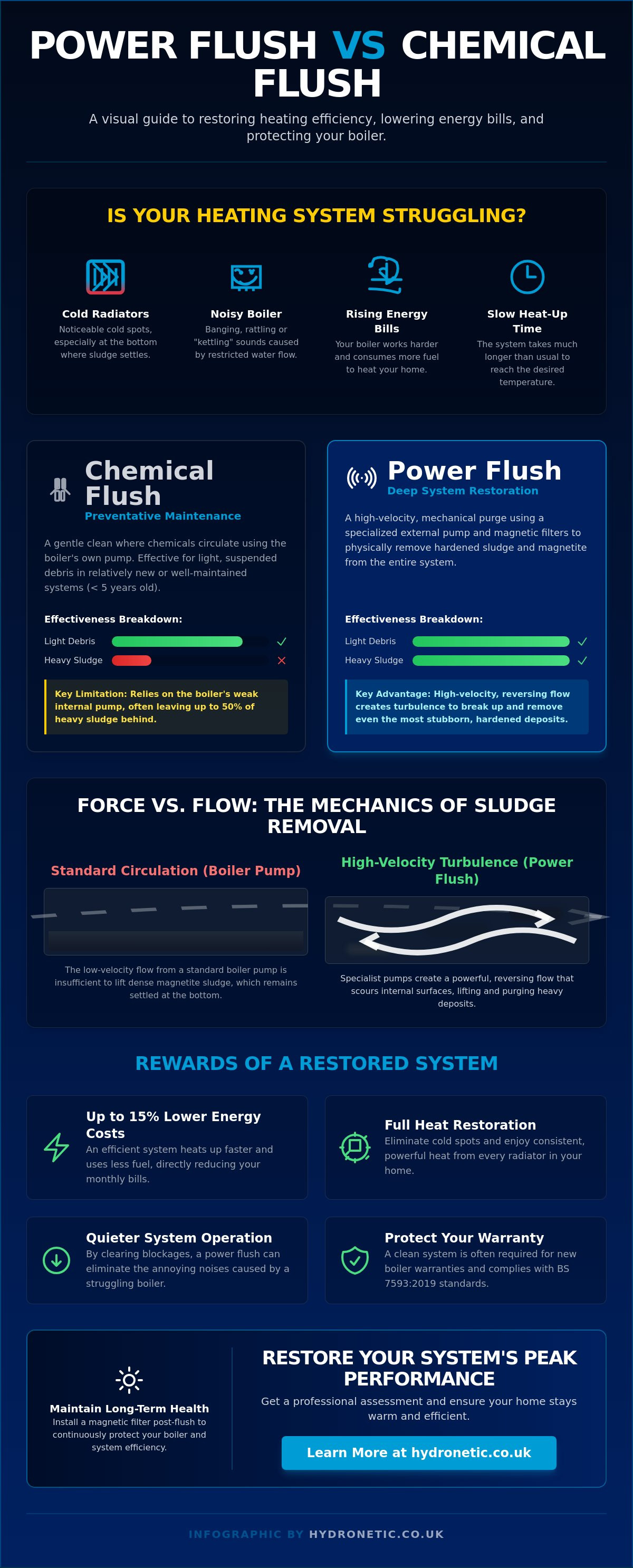
A chemical flush is a relatively gentle procedure. It involves adding specialized cleaning agents to the existing water, which then circulates through the radiators using the boiler’s internal pump. In contrast, a power flush is a more rigorous mechanical intervention. This process utilizes a high-velocity, low-pressure pumping station to physically purge sludge and magnetite from the entire circuit. It's a simple distinction: chemical flushes rely on chemistry alone, whereas power flushes combine chemical action with significant mechanical force. A power flush is a specialized restoration service for central heating systems.
The Role of a Chemical Flush in Maintenance
We typically recommend a chemical flush as a preventative measure for systems that are less than five years old. It's an excellent way to maintain a healthy system before major issues develop. The process generally follows a "drain and refill" sequence. A technician introduces a cleaning chemical, allows it to circulate to loosen light debris, and then flushes the system with fresh water. To finish, a corrosion inhibitor is added to protect the metal surfaces. While this is effective for light, suspended particles, it often fails to move heavy, settled magnetite sludge that has hardened at the bottom of radiators.
The Role of a Power Flush in Restoration
When a system shows symptoms of significant blockage, a power flush becomes necessary. If you notice cold spots at the bottom of your radiators or hear "kettling" noises from your boiler, these are signs that sludge has restricted the flow. During this service, we connect an external pumping station and use powerful magnetic filters to capture black iron oxide as it's dislodged. This mechanical turbulence is the only way to lift heavy magnetite that a standard boiler pump cannot move. This procedure is also essential before a new boiler is installed. It ensures that any existing debris doesn't immediately enter and damage the new heat exchanger, which helps protect your manufacturer's warranty.
The Mechanics of Sludge Removal: Force vs. Flow
The internal pump in your boiler is designed for circulation, not excavation. It moves water at a speed sufficient to transport heat, but it lacks the velocity required to lift heavy, settled magnetite. Magnetite, or "black sludge," is significantly denser than water. Over time, it settles in the lowest points of your radiators and horizontal pipe runs. When comparing a power flush vs chemical flush, the primary difference lies in how they handle this weight. A standard chemical flush often leaves behind up to 50% of the debris in horizontal pipework because the flow isn't strong enough to push it toward a drain point.
Professional power flushing equipment introduces the "Turbulence Factor." By using a high-velocity pump, we create a scouring action that dislodges stubborn deposits. One of the most critical features of our equipment is the "Reversing Flow" lever. By rapidly changing the direction of the water, we create a kinetic shock that breaks up hardened sludge far more effectively than a one-way stream ever could. This level of radiator sludge removal is essential for restoring the thermal performance of modern conventional heating systems.
How Chemicals Work (and Where They Fail)
Cleaning chemicals are designed to break the molecular bond between rust, scale, and your pipework. They turn solid blockages into a suspended liquid state. However, they have a major limitation: they can only clean where they can reach. If a radiator is 30% blocked with solid magnetite, the chemical-laden water simply flows through the 70% that is clear. The chemicals never touch the core of the blockage. Without a high-velocity purge, these loosened particles often re-settle elsewhere in the system once the boiler pump stops.
The Specialist Power Flush Advantage
A specialist power flush overcomes these hurdles by isolating each radiator. By closing off other parts of the circuit, we direct the full force of the pumping station through a single unit at a time. This ensures maximum velocity and scouring action. We also integrate high-strength magnetic filters into the loop. This allows you to see the physical proof of the magnetite being extracted in real-time. It's a transparent process that confirms your pipes are clear before we finish the job. If you suspect your system is struggling, a professional central heating power flush can provide the deep clean your home needs.
Choosing the Right Method: A Diagnostic Framework
How do you determine if your system needs a quick refresh or a deep mechanical purge? Selecting between a power flush vs chemical flush shouldn't be a guessing game. It requires a diagnostic approach based on the specific symptoms your heating is displaying. Investing in a chemical flush for a system that's already heavily blocked is often a waste of money; the chemicals simply won't have the velocity to clear the "black sludge" we discussed in the previous section. By properly maintaining and upgrading your equipment, you can avoid the most common causes of system failure.
The "Radiator Touch Test" is your most reliable DIY diagnostic tool. Wait for your heating to be on for at least 30 minutes, then carefully feel the surface of your radiators. If the top is cold but the bottom is hot, you likely have trapped air that can be resolved by bleeding the valve. However, if the bottom is cold while the top is hot, you have a classic case of settled magnetite. This heavy debris has formed a barrier that prevents hot water from circulating through the lower half of the unit. At this stage, a standard chemical treatment won't be enough to lift that weight.
Boiler noise is another critical indicator. Do you hear a whistling sound or a loud "kettling" noise that resembles a boiling kettle? This usually happens when sludge or limescale has restricted the flow within the heat exchanger, causing the water to overheat and turn to steam. This is particularly common for homes in London and the South East, where hard water scale accelerates the formation of internal blockages. If your boiler is cutting out or "cycling" frequently, it's a sign that the internal pump is struggling against a significant restriction.
When a Chemical Flush Is Sufficient
A chemical flush is the right choice if you're performing an annual service on a relatively new system. It's ideal for "topping up" your corrosion inhibitor levels to ensure the water chemistry remains stable. If the water in your header tank or the samples taken from your radiators are still relatively clear, this preventative measure will keep the system running smoothly. It's a proactive way to safeguard your home before any performance issues arise.
When Only a Power Flush Will Do
A power flush is mandatory if your radiators have permanent cold zones or take an excessively long time to heat up. When the circulation is so poor that the boiler overheats and shuts down, a mechanical purge is the only way to clear the path. This is especially true in regions like Surrey or Kent, where mineral deposits can combine with magnetite to create a stubborn, concrete-like substance. In these cases, a professional boiler blockage clearance is the only way to restore the system to its full thermal capacity.
The Professional Power Flush Process in the South East
Executing a successful restoration requires more than just high-end equipment; it demands a methodical, step-by-step approach. When you're deciding between a power flush vs chemical flush, it's helpful to understand that the professional process is far more involved than simply pouring liquid into a tank. We treat every home as a unique diagnostic case, ensuring the cleaning is tailored to the specific level of magnetite build-up in your pipes.
Step 1: Initial Inspection. We begin with a turbidity test to measure the clarity of your system water. This gives us a baseline to prove the effectiveness of the flush once we're finished.
Step 2: Connecting the Station. Our technicians usually connect the pumping station at the central heating pump or a single radiator. This creates a closed loop that allows us to bypass the boiler if necessary to protect delicate components.
Step 3: Systematic Cleaning. We isolate every radiator one by one. By focusing the full velocity of the pump on a single unit, we ensure that even the most stubborn sludge is dislodged. We also flush the boiler heat exchanger to clear any limescale.
Step 4: Neutralization and Protection. After the debris is removed, we neutralize any remaining cleaning chemicals. We then add high-grade corrosion inhibitors to prevent future rust from forming.
Step 5: Certification. We perform a final performance check to ensure heat is even across all surfaces. You'll receive a certificate of completion, which is often required to keep your boiler warranty valid.
Regional Heating System Challenges
Homes across various regions in the United States face unique challenges due to diverse water compositions and aging infrastructure. In many areas, hard water significantly accelerates the formation of limescale and mineral deposits within heating systems. When this scale mixes with magnetite (iron oxide sludge), it creates a thick, insulating layer that can lead to "kettling" or whistling noises from your boiler or furnace heat exchanger. Additionally, older homes, particularly in established urban areas, often feature complex pipework where sludge and debris can easily settle, leading to inefficient heating. The experts at Hydronetic Power Flush understand these regional system types and employ specialized techniques to ensure every corner of these intricate layouts is thoroughly cleaned. If you're struggling with poor circulation or reduced heating efficiency, a professional power flush is the most effective way to address these common issues.
What to Expect on the Day
A proper restoration is a thorough process that shouldn't be rushed. While some providers claim to finish in two hours, a high-quality job typically takes between 6 and 8 hours. This time is necessary to ensure every radiator is individually scrubbed by the high-velocity flow. At Hydronetic Power Flush, we prioritize the safety of your home environment. We use protective dust sheets and waterproof barriers to ensure your carpets and floors remain spotless throughout the day. The result is immediate: you'll notice a quiet boiler and radiators that feel hot from top to bottom within minutes of the system being restarted. If you're ready to restore your home's comfort, you can find out more about our central heating power flush services today.
Maximising ROI: Life After the Flush
Investing in a professional system clean is a strategic move for your home's long-term finances. Once the sludge is removed, your heating operates with significantly less resistance. This improved efficiency translates directly into lower running costs. Industry data suggests that a fully restored system can reduce annual gas bills by up to 15%. Because the water can transfer heat more effectively, your boiler doesn't need to run for as long to reach your thermostat's target temperature. This reduced workload also extends the life of your boiler pump, as it no longer has to push against heavy, abrasive magnetite.
To keep your system in this peak condition, we recommend installing a high-quality magnetic filter, such as a Magnaclean. This device acts as a permanent guard, capturing any new metallic particles before they can settle in your radiators. Maintenance becomes a simple matter of checking the filter during your annual service. This is where the power flush vs chemical flush debate reaches a practical conclusion: use the power flush for the initial restoration and a chemical "top-up" during your yearly service to maintain the correct inhibitor levels.
Reduced Energy Bills: Lower gas consumption through better heat transfer.
Component Longevity: Less wear and tear on pumps and heat exchangers.
Quiet Operation: Elimination of the kettling and whistling caused by internal debris.
Consistent Comfort: Radiators that stay hot across their entire surface area.
Protecting Your Boiler Warranty
Maintaining a clean system is often a legal and contractual requirement. Leading manufacturers, including Worcester Bosch and Vaillant, frequently state that a system must be flushed according to BS 7593:2019 standards to keep the warranty valid. If a brand-new boiler fails because of sludge from old pipework, the manufacturer may refuse to cover the repair costs. Our professional certificate of flushing serves as your "insurance" policy. It provides documented proof that your system was cleaned to industry standards, safeguarding your investment if you ever need to make a claim.
The Hydronetic Difference
We don't believe in quick fixes or unnecessary replacements. While some general plumbers might suggest a costly new boiler when they encounter a cold system, we focus exclusively on restoration. Our expertise lies in radiator sludge removal and complex blockage clearance across London, Surrey, Kent, and Essex. We have the specialized equipment and regional experience to handle the unique challenges of South East hard water. If you want to restore your heating's efficiency and protect your home's comfort, get a specialist power flush quote for your home and see the difference a professional clean makes.
Restore Your Home's Heating Efficiency Today
Choosing between a power flush vs chemical flush is ultimately about matching the remedy to your system's specific health. While a chemical treatment works well for routine maintenance on newer pipework, a power flush is the necessary choice for restoring a system plagued by cold spots or boiler noise. By removing the heavy magnetite that standard pumps can't move, you'll see an immediate improvement in heat distribution and a welcome reduction in your monthly energy bills.
We provide a specialist focus across London, Essex, Kent, and Surrey, unblocking boilers and restoring radiator heat with technical precision. Every service we perform includes a detailed system health report, ensuring you have the documentation needed to protect your manufacturer's warranty. You don't have to settle for an inefficient home or a noisy boiler when a professional solution is within reach.
Book your specialist central heating power flush today and take the first step toward a warmer, more reliable home. Our expert technicians are ready to help you reclaim your domestic comfort with a system that runs as smoothly as the day it was installed.
Frequently Asked Questions
Can I perform a power flush myself using hired equipment?
While you can hire the machinery, we don't recommend attempting a DIY power flush. Professional technicians have the diagnostic experience to identify fragile pipework that might fail under mechanical stress. Without the correct training, it's easy to cause internal flooding or leave significant amounts of loosened sludge trapped in the boiler's heat exchanger. Specialists also use industrial-grade magnetic filters and chemicals that aren't typically available at local hire shops.
Will a power flush cause my old radiators to leak?
A professional power flush uses high velocity but low pressure, so it won't burst a healthy radiator. However, the process can sometimes reveal pre-existing pinhole leaks that were previously "plugged" by thick sludge or rust. If your radiators are severely corroded internally, removing the debris might expose these existing holes. We always inspect the system's integrity before starting to minimize this risk for older installations.
How do I know if my radiators have sludge or just need bleeding?
The location of the cold spot tells you exactly what the problem is. If the top of the radiator is cold but the bottom is hot, there's trapped air that you can fix by bleeding the valve. If the bottom is cold and the top is hot, you're dealing with settled magnetite sludge. This heavy debris has sunk to the base and is blocking the flow of hot water, requiring a professional clean to resolve.
How long does a professional power flush take for a 3-bedroom house?
A thorough service for a standard 3-bedroom property typically takes between 6 and 8 hours. This duration is necessary because we isolate and scour every radiator individually to ensure the "turbulence factor" dislodges all debris. Any provider promising to finish the job in two hours is likely performing a basic system rinse rather than a restorative deep clean. A proper timeline ensures your system is fully purged and balanced.
Is a chemical flush enough to satisfy my boiler manufacturer warranty?
A chemical flush is only sufficient if it successfully restores the system to the cleanliness standards mandated by BS 7593:2019. When comparing a power flush vs chemical flush for warranty purposes, the most important factor is the water quality at the end of the process. If your system is heavily contaminated, a simple chemical rinse won't remove enough debris to protect a new heat exchanger, which could lead to a rejected warranty claim later.
What is the average cost difference between a chemical and power flush in London?
A power flush is a more significant investment because it requires specialized pumping equipment and a full day of expert labor. A chemical flush is a simpler maintenance task that usually takes around 90 minutes and involves fewer materials. While the upfront cost for a power flush is higher, it provides a restorative result that a chemical clean cannot match for older or neglected systems. It's a choice between long-term restoration and basic preventative care.
Can a power flush fix a completely blocked boiler heat exchanger?
Yes, we can often clear a blocked heat exchanger using targeted power flush vs chemical flush techniques. By connecting our pumping station directly to the boiler's flow and return, we can use concentrated chemicals and high-velocity water to break down the blockage. This specialized boiler blockage clearance is a highly effective alternative to the expensive and time-consuming process of replacing the entire heat exchanger component.
How often should a central heating system be power flushed?
Most systems only require a power flush every 5 to 10 years, provided they are maintained correctly in between. If you have a magnetic filter installed and you top up your corrosion inhibitors annually, you might never need another deep clean. The best approach is to monitor your system for symptoms like noisy operation or cold spots. These signs indicate that debris is building up and it's time for a professional assessment.


Comments